Julissa

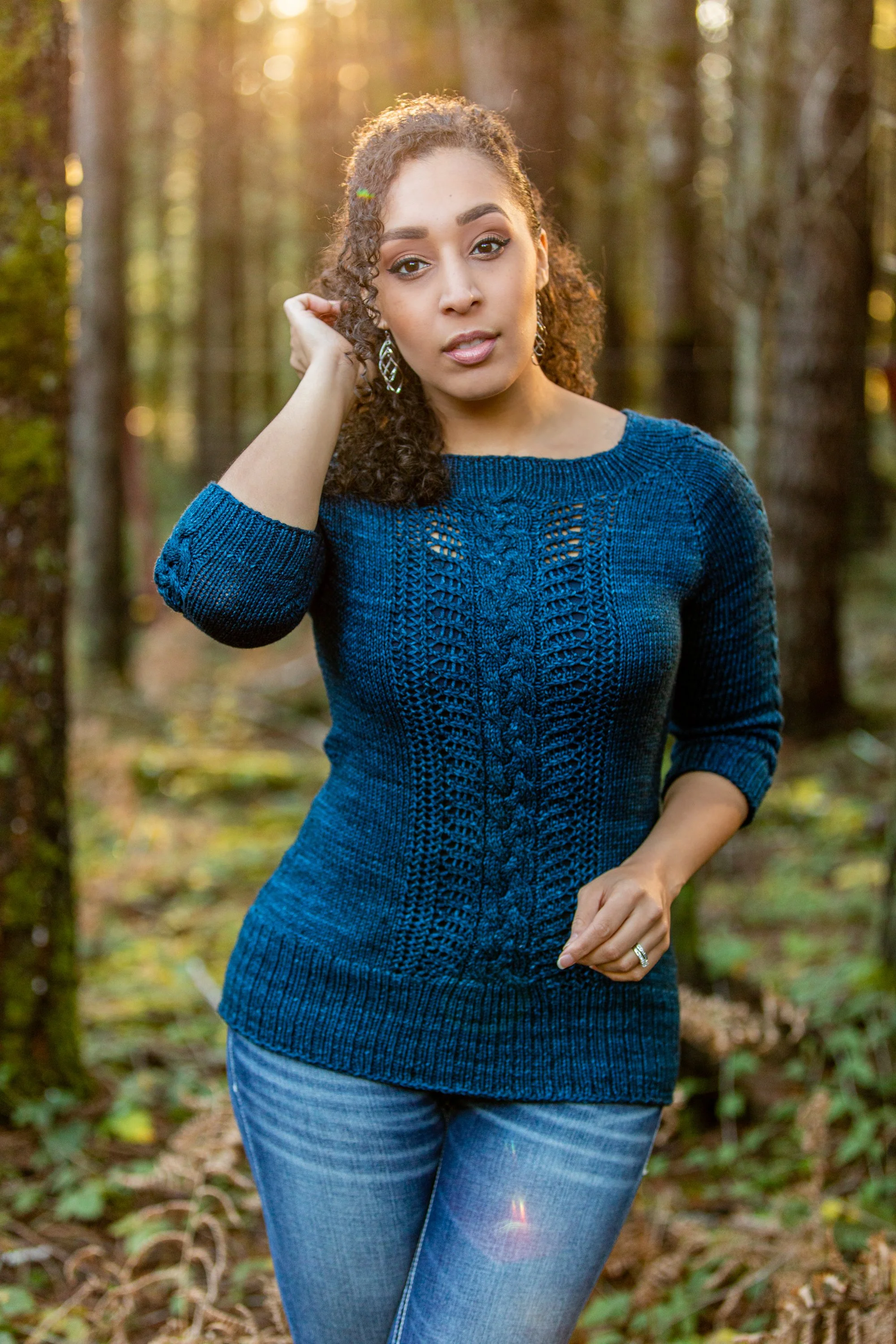


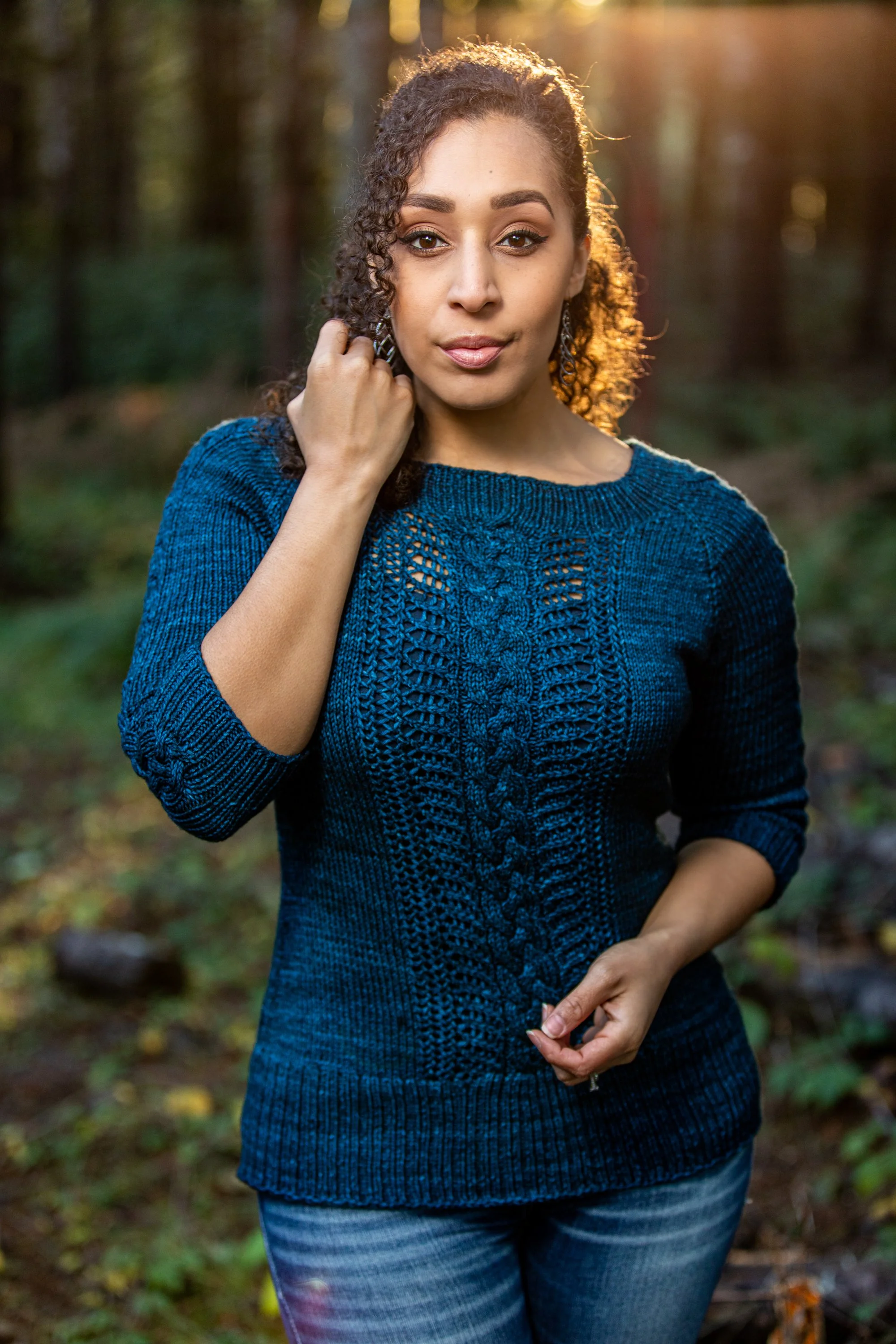


Julissa
Back in 2011, I set out to design the sweater I wished I had when I first started knitting garments. I wanted something stunning but approachable. Something that looked intricate but was secretly easy to make. A pattern that could help knitters take that big, scary leap into sweater-making without feeling left in the dark.
That’s how Julissa—my very first garment pattern—was born. It’s a top-down, beautifully detailed, boat neck raglan pullover that quickly became the first-ever sweater for so many knitters. But just like every knitter evolves, so do patterns.
Fast forward 10 years to 2021, and I knew Julissa deserved more. In that decade, I had learned so much about fit, shaping, finishing techniques, and how to make my knitting patterns more intuitive. I cared about this design too much to leave it in the past, so I completely updated it with everything I’d learned:
Expanded size range to meet today’s size-inclusivity standards
More refined shaping for the neckline and larger busts
Extra guidance on customization for different body types and fit preferences
Detailed explanations and links to video tutorials for professional shaping and finishing techniques
More printer-friendly and interactive
This pattern is an oldie but a goodie; a legacy piece that has grown and improved right alongside me and the knitters who’ve made it. Ready to become a part of its history?
What makes Julissa special
Looks impressive, knits like a dream. The cables and lace might seem fancy, but I included both charted and written instructions that walk you through every step. You’ll find yourself enjoying the process.
Sized and shaped for your body. 18 sizes with detailed bust shaping and customization notes so you can dial in the fit. No guessing games.
A sweater for anyone. Whether it’s your first or your twentieth, the techniques and fit details work across all skill levels.
Try it on as you knit. Because it’s top-down, you can adjust things as you go. You’ll know exactly how it fits before you’re done.
Techniques that transfer to other patterns. Short rows, shaping, and professional finishing details—skills you’ll use for years.
Testermonials
“This is the best fitting sweater I’ve ever made. I seriously almost cried when I tried it on because it feels amazing and I felt beautiful in it.”
“This is the BEST fitting sweater I’ve ever made or worn. I was so thoroughly impressed with all the work it must have taken for you to figure out all that shaping info and to articulate it for your pattern. Seriously, well done!”
“The pattern is incredibly thoughtful in its detail and explanations! I really appreciated the color diagram for yoke marker placement and thought the lace/cable chart page was clear and not too busy. Some of the pages can look a bit intimidating at first glance, but the info included is helpful and concise - just fantastically thorough, which helped decrease that intimidation immediately!”
“It’s not as difficult as it looks, especially the cables. The well-written pattern is helpful. It’s a great design even for the beginners.”

What you get
Instant PDF download. Cast on whenever you’re ready.
Charted and written instructions. Choose whichever format works for you.
Video tutorials. Step-by-step walkthroughs for techniques you may not have used before.
Inclusive size range & two sleeve lengths to choose from. Plus a detailed schematic so you’re fully informed.
Fit adjustment guidance. Instructions for customizing the length and adding or modifying bust, waist, and hip shaping.
Your turn to write this sweater’s story.
Back in 2011, I set out to design the sweater I wished I had when I first started knitting garments. I wanted something stunning but approachable. Something that looked intricate but was secretly easy to make. A pattern that could help knitters take that big, scary leap into sweater-making without feeling left in the dark.
That’s how Julissa—my very first garment pattern—was born. It’s a top-down, beautifully detailed, boat neck raglan pullover that quickly became the first-ever sweater for so many knitters. But just like every knitter evolves, so do patterns.
Fast forward 10 years to 2021, and I knew Julissa deserved more. In that decade, I had learned so much about fit, shaping, finishing techniques, and how to make my knitting patterns more intuitive. I cared about this design too much to leave it in the past, so I completely updated it with everything I’d learned:
Expanded size range to meet today’s size-inclusivity standards
More refined shaping for the neckline and larger busts
Extra guidance on customization for different body types and fit preferences
Detailed explanations and links to video tutorials for professional shaping and finishing techniques
More printer-friendly and interactive
This pattern is an oldie but a goodie; a legacy piece that has grown and improved right alongside me and the knitters who’ve made it. Ready to become a part of its history?
The Knitty-Gritty
DESCRIPTION
Julissa is a modern raglan pullover knit seamlessly from the top down using a worsted weight yarn. A wide neckline, striking cable and lace details, three‑quarter length or full-length sleeves (your choice!), and a bit of waist shaping all together create this feminine, easy-to‑knit top. Short rows are used to lower the front neckline for a comfortable fit, and instructions are also provided for adding bust darts, if necessary. Wear this beautifully fitted sweater with your favorite pair of jeans and a complementary colored tee or tank top underneath.
Originally published as my first sweater pattern in 2011, this pattern was revised in 2021 to be size inclusive and to improve the fit of preexisting sizes while staying true to the original sweater’s look and feel.
Additional Languages
Also available in French.
SIZES
1 (2, 3, 4, 5, 6, 7) [8, 9, 10, 11, 12, 13] {14, 15, 16, 17, 18}
FINISHED BUST CIRCUMFERENCES
In Inches: 30.5 (32, 34.5, 36, 38.5, 40, 42.5) [44, 46.5, 48, 50.5, 52, 54.5] {56, 58.5, 60, 62.5, 64}”
In Centimeters: 76 (80, 86, 90, 96, 100, 106) [110, 116, 120, 126, 130, 136] {140, 146, 150, 156, 160} cm
Pullover is intended to fit with 1–3” (2.5–7.5 cm) of negative ease and no positive ease at the full bust. Sample shown in size 3 with 1.5” (4 cm) of negative ease and no bust darts.
YARN
Plied, worsted weight yarn in the following amount(s):
With 3/4 Length Sleeves: 856 (896, 961, 1011, 1077, 1128, 1194) [1244, 1314, 1365, 1441, 1504, 1572] {1637, 1716, 1768, 1844, 1911} yards / 782 (820, 879, 924, 985, 1031, 1092) 1138, 1202, 1248, 1318, 1375, 1438 {1497, 1569, 1616, 1686, 1747} meters
For Long Sleeves, Add: 136 (141, 146, 155, 160, 164, 169) [179, 183, 192, 202, 211, 221] {230, 239, 249, 253, 263} yards / 125 (129, 133, 142, 146, 151, 154) 163, 167, 176, 184, 193, 202{210, 219, 228, 232, 241} meters
Sample shown in Malabrigo Rios [worsted weight, 100% superwash merino wool] in colorway ‘Azul Profundo.’
NEEDLES
US 7 (4.5 mm) circular needle, 24” (60 cm), or needle size necessary to obtain correct gauge
US 5 (3.75 mm) circular needle, 24” (60 cm), or needle size .75 mm smaller than gauge needle
Circular needles in the same two sizes, 32” (80 cm) or longer, as appropriate for the sweater size chosen
Appropriate needle(s) in both sizes for your preferred method of knitting small circumferences in the round
GAUGE
20 sts and 29 rnds = 4” (10 cm) in stockinette stitch worked in the round using larger needles, blocked
NOTIONS
(1) Stitch marker, unique, for beginning of round
(3) Stitch markers, color A, for raglan lines
(6) Stitch markers, color B, for cable panels
(2) Removable markers, to mark centers of underarms
Cable needle
Tapestry needle
Waste yarn or two spare circular needles/cords, for placing sleeve stitches on hold
This one’s calling your needles.
Back in 2011, I set out to design the sweater I wished I had when I first started knitting garments. I wanted something stunning but approachable. Something that looked intricate but was secretly easy to make. A pattern that could help knitters take that big, scary leap into sweater-making without feeling left in the dark.
That’s how Julissa—my very first garment pattern—was born. It’s a top-down, beautifully detailed, boat neck raglan pullover that quickly became the first-ever sweater for so many knitters. But just like every knitter evolves, so do patterns.
Fast forward 10 years to 2021, and I knew Julissa deserved more. In that decade, I had learned so much about fit, shaping, finishing techniques, and how to make my knitting patterns more intuitive. I cared about this design too much to leave it in the past, so I completely updated it with everything I’d learned:
Expanded size range to meet today’s size-inclusivity standards
More refined shaping for the neckline and larger busts
Extra guidance on customization for different body types and fit preferences
Detailed explanations and links to video tutorials for professional shaping and finishing techniques
More printer-friendly and interactive
This pattern is an oldie but a goodie; a legacy piece that has grown and improved right alongside me and the knitters who’ve made it. Ready to become a part of its history?
Buy it on Ravelry.
You may also like . . .

This rendition of Julissa puts a new spin on the original, boat-necked pullover. The lower, scooped neckline along with a bit of waist shaping and flattering sleeve length all together create a modestly flirty and feminine piece that will complement a variety of body types.
This pullover is knit seamlessly from the top down using raglan shaping and a worsted weight yarn, which lends beautiful stitch definition to the cable and lace details. Choose from cap or three-quarter length sleeves and wear with a neutral or colored camisole underneath.

You know those days that start with spilled coffee on your desk and broken eggs on the kitchen floor? The kind where you just need easy, repetitive knitting and maybe some puppy snuggles to reset? That's exactly the kind of day I was having when I started working on Nydia.
Before that day, I’d already fallen in love with the addictive, potato-chip textured lace stitch from my Indira shawl and cowl—so easy to memorize you can practically knit it in your sleep. Once it got in my head I couldn't stop thinking, “What if I put this in a sweater?” So I did.
As this sweater became my go-to project through quiet evenings after long work days, it felt like finding comfort in my stitches. I could rely on the rhythm and familiarity of the repeat to melt away any stress or cares. The name Nydia—which means a safe place—felt right.
Nydia is a versatile pullover worked seamlessly from the top down in DK weight yarn with compound raglan shaping. It features a scoop neckline, but you can throw on the optional separate cowl to change up the look entirely. It's also cropped. (Yes, I know. My dad’s exact words were, "That’s a little short, baby . . ." when I showed him my second Nydia, and I had to assure him it's a thing.) But here's the beauty: you can totally make it longer if that’s more your style, and several knitters have!
This is the sweater you’ll reach for when you need something that just works—you just have a couple choices to make. So are you team cropped-with-cowl, or are you making it your own with a different length? I can’t wait to see.

In September 2018, I walked out of my local yarn shop with a sweater quantity of yarn and a familiar feeling. You know the one: that on-the-brink of starting something new, creative juices flowing, and endless possibilities feeling that only a maker can know. I didn’t have a pattern in mind, but I knew that this yarn would become something special.
Then something funny happened: I kept unintentionally sketching the same design. A pullover with cabled panels, a rounded neckline, “cold” shoulders, and set-in armholes appeared eight times, to be exact, on different days and in separate sketchbooks. It was almost as if the yarn was telling me, "This is what I want to be."
Now with a clear vision in mind, I started swatching. The yarn by itself was beautiful, soft, and airy with fantastic drape, but it lacked the cozy factor I was going for. When I paired it with a mohair/silk blend, the fabric transformed. It had depth and warmth, and it felt like kittens and clouds—exactly what I wanted.
In late 2019, I cast on and quickly realized that top-down construction wasn’t practical for the design I had sketched, so I restarted from the bottom up. When I tried it on for the first time, something was off. I frogged back and reknit the yoke. Still not right. I frogged again. And again. I couldn’t put my finger on what was wrong. All I know is that I was feeling pretty deflated. The yarn was practically begging me to stop frogging and reknitting it, and I needed a break.
Apparently, a three-year break.
Over those years, thoughts of “needing to finish that sweater” hung over my head. Would I ever finish? Had I failed? But while the sweater waited, I kept learning—about fit, grading, size inclusivity. I poured that knowledge into other patterns. And each time I released something new, I’d pull this sweater out with renewed determination. Yet I still didn’t have the answer.
It finally hit me in fall 2023. What if I changed everything? V-neck instead of scoop neck. Closed shoulders instead of open. Raglan sleeves instead of set-in. The revisions came together perfectly, and when I finally tried it on again . . . it worked!
This design challenged me more than any other. There was a span of time where I didn’t think I could finish it. But things got easier—things fell into place—when I stopped trying to force an idea and let the design take me where it wanted to go all along. In hindsight, it feels a little like serendipity.
It was, simply, “Meant to Vee.”