
Free Custom Knitting & Crochet Graph Paper Generator
If you need actual-sized graph paper to match your knitting or crochet gauge exactly, use this free tool to create it! Custom graph paper is perfect for . . .
planning shaping, such as short rows, increases, or decreases;
designing or doodling stranded colorwork motifs to visualize the scale and how colors will interact before casting on;
building and ensuring mosaic knitting charts follow the rules of slip-stitch colorwork;
charting cables, lace, or other textured stitch patterns;
figuring out buttonhole spacing and button placement;
and more!
. . . all in the same gauge of the yarn you are using for a project or your next pattern design!
This tool is free. Your support, however, is always appreciated!
Any donation or proceeds will go toward the maintenance or development of free resources like this one. :)
You may like . . .
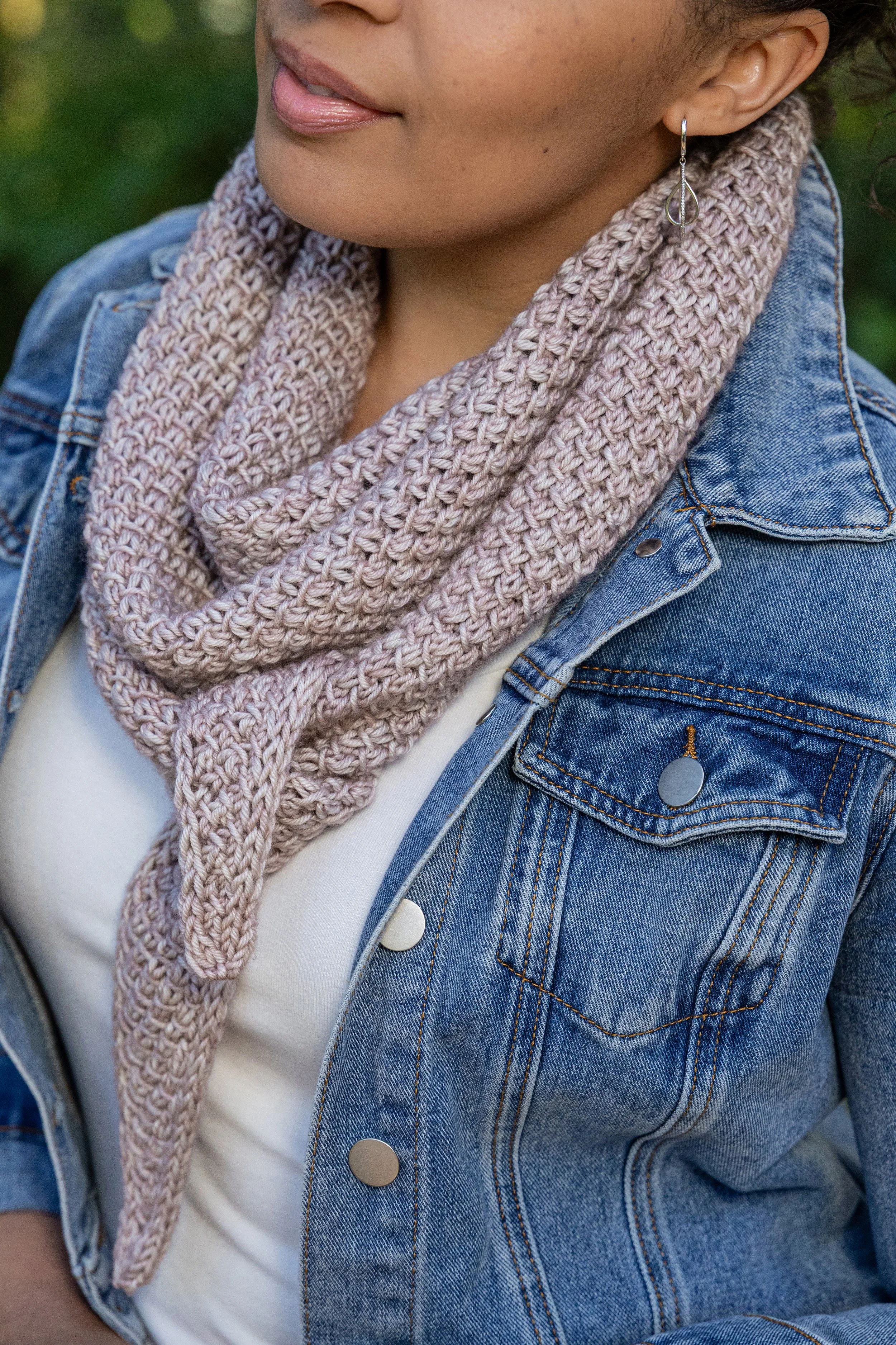
For many years, my yarn cabinet was home to four skeins—two singles and one pair—that drew my eye every time I perused my stash but that I thought weren’t enough for anything bigger than a hat or a cowl. They were all beautiful but, sadly, discontinued and irreplaceable. Then, during a particularly demanding time at work, I just needed something easy and practical to knit. Some people turn to garter stitch. Others go for brioche. For me, it’s a potato-chippy, rhythmic textured lace stitch—the same squishy fabric that shows up in several of my patterns. I’d also noticed that skinny scarves were having a moment, so I decided to make one myself. And I knew exactly which yarns to reach for.
I started with just a few stitches and played with shaping ratios before casting on in earnest. Once the scarf was on my needles, I enjoyed the pattern and the colorplay of the variegated, silk/merino I was using so much that I finished in just a week. After blocking, I excitedly tried it on and thought it might be the cutest accessory I’d ever made. I immediately wanted to make another, so I cast on again using slightly faster shaping and a leftover skein from my second, burgundy Nydia pullover. I loved this one just as much as the first. Making a third was only natural. But this time, I wanted to use up two skeins of a creamy Aran weight I’d been saving for some sort of neckwear, so I used an even faster shaping ratio. In the end, all three scarves were different and wearable in their own right.
I called this pattern the Tipping Point Scarf not only for the obvious reasons—that it’s knit from tip to tip and reaches a point in the center—but also because it’s the result of pushing the shaping just far enough with what you’ve got until what feels like barely enough yarn becomes a full scarf.
That special skein at the back of your stash or the lovely yarn you bought on a whim? Cast on and find its tipping point.

Kids change quickly, but the joy of knitting for them never does.
I first designed the Bittie Bestie Vestie for the same tiny human who once toddled around in the Little Nydia Cardigan. She’s not tiny anymore, of course. She’s taller now, a little braver in her choices, and full of Opinions with a capital O.
When she spotted me working on this vest, she reached for the fuzzy ball of mohair like she already knew it belonged to her. I dared to ask if she liked the color, and she gave me this tiny, shy nod that said, Obviously. That was all the approval I needed.
Naturally, once hers was finished, I couldn’t leave her little brother out. But I didn’t want a twin set; I wanted each vest to have its own personality. So the second version came to be: one soft and airy with mohair and lace, the other clean and classic with a smooth wool and a crisp texture, both sharing the same signature cables and “instant favorite” energy as the adult Bestie Vestie.
The vest itself is worked bottom up with seamless construction, smart shaping, and just enough variety to keep the knit engaging. It’s friendly for newer knitters, still fun for the veterans, and supported with step-by-step video tutorials so you always know exactly where you’re headed.

Back in 2011, I set out to design the sweater I wished I had when I first started knitting garments. I wanted something stunning but approachable. Something that looked intricate but was secretly easy to make. A pattern that could help knitters take that big, scary leap into sweater-making without feeling left in the dark.
That’s how Julissa—my very first garment pattern—was born. It’s a top-down, beautifully detailed, boat neck raglan pullover that quickly became the first-ever sweater for so many knitters. But just like every knitter evolves, so do patterns.
Fast forward 10 years to 2021, and I knew Julissa deserved more. In that decade, I had learned so much about fit, shaping, finishing techniques, and how to make my knitting patterns more intuitive. I cared about this design too much to leave it in the past, so I completely updated it with everything I’d learned:
Expanded size range to meet today’s size-inclusivity standards
More refined shaping for the neckline and larger busts
Extra guidance on customization for different body types and fit preferences
Detailed explanations and links to video tutorials for professional shaping and finishing techniques
More printer-friendly and interactive
This pattern is an oldie but a goodie; a legacy piece that has grown and improved right alongside me and the knitters who’ve made it. Ready to become a part of its history?
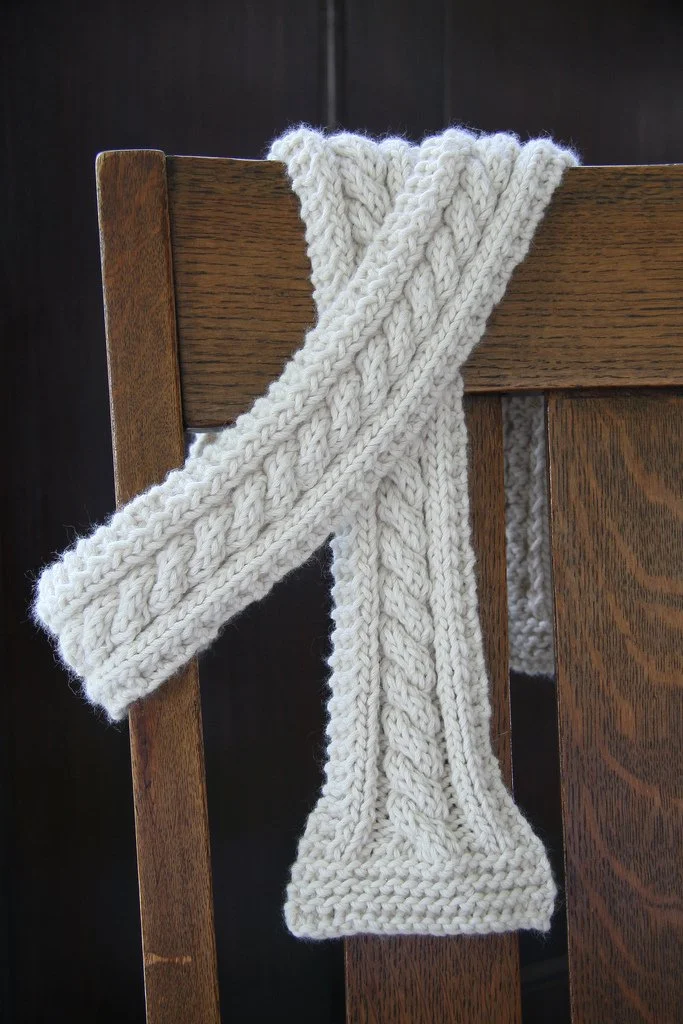
It was September 2006, exactly one year after I had learned to knit. My husband Cody and I had been dating for six months, and he’d been watching my love of knitting grow. He also knew I’d never been to our local yarn store, so he took me there one afternoon for my very first visit. He patiently waited while I browsed and squished all the luxury and natural fiber yarns. I’d never worked with anything but acrylic before.
A cashmere blend yarn in a lovely cream stood out, but I only had the budget for two 98-yard skeins. I could make a scarf, I thought, but not another garter stitch scarf. I was ready to graduate from those. Cables had always mesmerized me—I’d worn and loved them in store-bought sweaters for years—so they were the next thing I wanted to learn. With the yarn in hand as I continued to look around the shop, I found a knitting booklet that covered basic cable techniques and a large metal cable needle (the very same one I still use). I was ready to start that evening.
I had to maximize the yardage I had, so I cast on just a few stitches more than what I needed for the cable. When it came time to actually make my first cable, it didn’t work. The instructions didn’t make sense. Cody actually fell asleep while I struggled, trying to figure out what the booklet wasn’t saying clearly until it finally clicked. What emerged was this simple scarf—a design I didn’t know would become a pattern a couple years later or that would set the stage for cables becoming central to my design portfolio.
This scarf is perfect for learning cables because it builds on techniques you already know. A few rows of garter stitch, simple knits and purls, and one straightforward cable repeat. The narrow width means you reach the next cable row quickly and see progress fast. It’s the kind of project where every stitch feels like a small victory.
How to Use This Graph Paper Generator
If on mobile, scroll down and ensure that the 'Generate PDF' button is green before following these instructions. If not, refresh the page.
- Enter number of stitches and rows equal to 4" (10 cm) (decimals are okay!)
- Select scale ratio
- Choose page orientation (portrait for tall projects, landscape for wide projects)
- Adjust line and outline weights, if desired
- Smart Feature: Stitch and row intervals auto-sync with your gauge to the nearest whole stitch to outline 4" (10 cm) squares! Change manually if you want different intervals outlined, such as 1" (2.5 cm) squares, stitch pattern repeats, or every so many stitches and rows for easier counting. Double-click interval fields to re-sync.
- Click or tap the Generate PDF button
If asked, click 'Allow' to download. File will be saved in your Downloads folder. - When printing, make sure "Actual size" (or Scale: 100%) is selected and paper size is set to "Letter"
✨ Advanced Generator Features:
- Portrait & Landscape: Choose page orientation based on your project needs
- Auto-Sync Intervals: Stitch and row intervals automatically match your gauge to the closest whole stitch to outline 4" (10 cm) squares
- Manual Override: Change interval values manually if you want bold outlines at different intervals
- Re-Sync Option: Double-click stitch or row interval fields to re-sync with gauge
- Mobile Friendly: Works perfectly on phones and tablets
📐 When to Use Each Page Orientation:
- Scarves and long rectangular projects
- Sweater fronts and backs
- Tall, narrow designs
- More rows, fewer stitches per page
- Wide shawls and wraps
- Blanket sections
- Wide, short designs
- More stitches, fewer rows per page
You may also like . . .

Is there a type of garment that you haven’t made yet? Perhaps you've never knitted (or worn!) a vest before. Or maybe you’ve already made a few and you’re looking for a pattern that feels fresh—something quick, transitional, and size-inclusive for the season ahead.
I was in the first camp when I tuned into an Instagram Live one afternoon, where two besties talked all about a vest-along they were about to participate in. As they excitedly chatted about silhouettes, textures, and how they’d style a vest, I couldn't think about anything else. Before the live even ended, I’d grabbed the nearest notepad and scribbled a few rough sketches based on another pattern I had in test knitting at the time.
The first sketch was heavily cabled, front and back. “Keep it simple!”, I thought to myself. But it was the third sketch—the last one on that notepad—that stood out as “the one.”
I started a spreadsheet and ordered yarn faster than it took you to read this sentence. One package was coming from another state, the other from a couple hours north of me. Tracking said nearly a week. Torture!
To my relief, the yarn arrived four days sooner than estimated, and just in time for me to work on it while podcasting and watching You’ve Got Mail with my own bestie during her visit from Canada. There’s something special about knitting with someone you love in the room, even if you’re both just doing your own thing.
As I made progress on the pattern and then worked on a second sample, my husband—completely unaware of what (or who!) had inspired me to drop everything else—started calling it the Bestie Vestie. I loved how that name rolled off the tongue. It was cute, memorable, and different from anything I’ve named before.
The icing on the cake: 90 test knitters helped bring this pattern to life, and so many of them said the same thing—this is the best-fitting thing they’ve ever made. If you decide to make one too, whether as your first vest or a new one to add to a growing collection, I hope that it’s your Bestie Vestie yet.
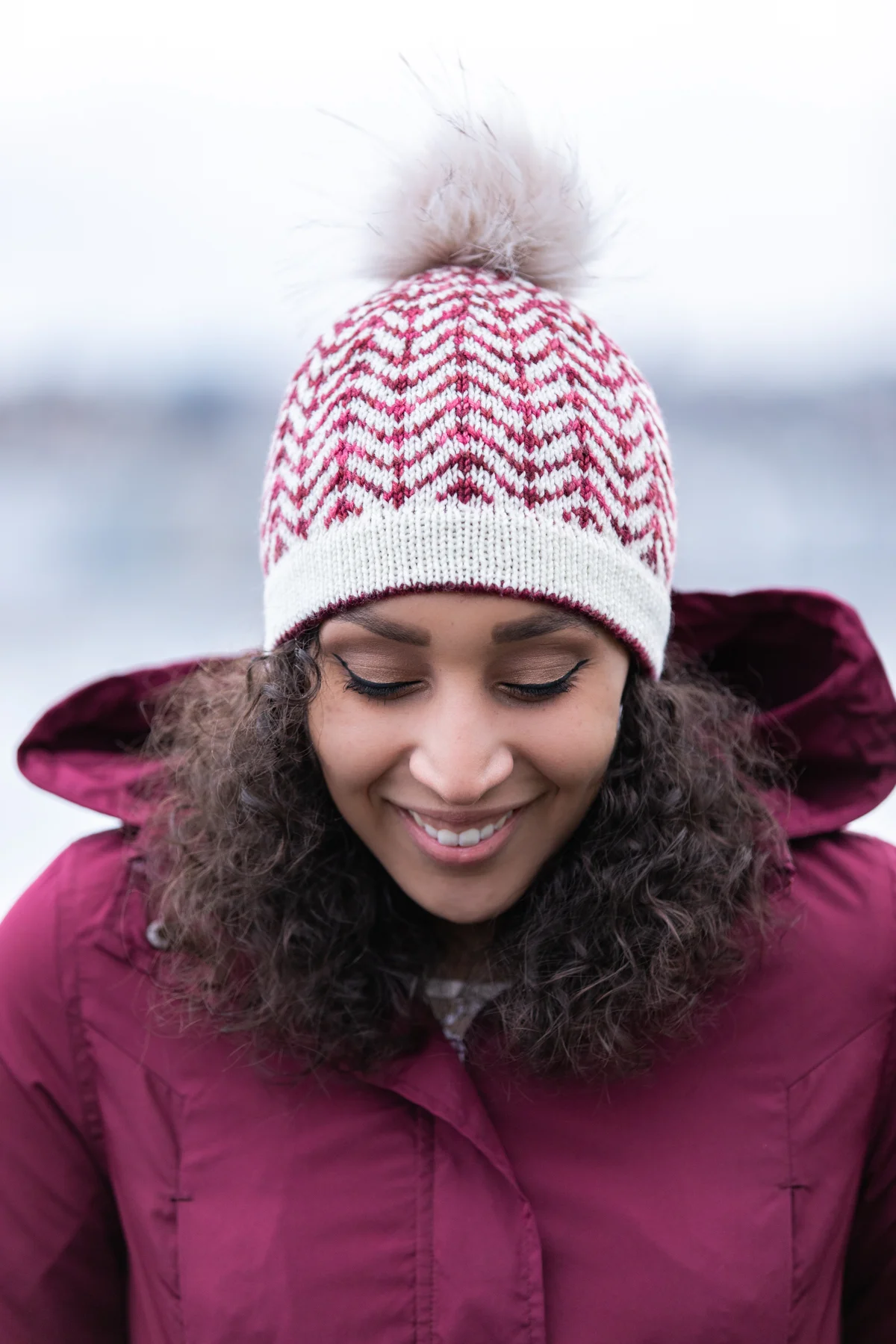
There are hats you make because you need a hat. And then there’s the Novemberist—a hat with a story behind it.
November 2018 felt like it held multiple lifetimes. That month, I had my first trunk show at a local yarn shop, where I picked up two yarns for a hat design I had brewing. Then my husband Cody, his little cousin, and I took our first trip to Victoria, British Columbia, to explore the city, catch live music, and enjoy great food. And after all that, I attempted something I'd never done before: stranded colorwork.
The design process was playful and exciting. I developed three chevron charts, swatched two, and chose one for this pattern—the other would later become my Kestra Hat. While making the very first hat in the colors I'd chosen at the LYS, I learned to keep my floats relaxed, to catch them properly, and to maintain the right color dominance. It was awkward and fun, using both my hands together in a way that was entirely new.
For the final sample, Cody helped me choose colors from my stash: a warm red with rust and strawberry undertones for the chevrons, paired with natural for the background. I made the brim doubly thick, both for warmth and because I loved how a pop of color would peek out from beneath it. I'd done something similar on another hat pattern called Corbin, and I really loved the look.
The hat that emerged from that memorable month became part of the Novemberist set, a hat and mitt pairing that’s waiting to become part of your story too. What will your November look like?

I didn’t grow up watching much TV, but my husband Cody comes from a Star Trek-loving family. The Next Generation (or TNG) was basically always playing at his dad’s house while Cody and I were dating. After we’d been married for a while, he wanted me to actually watch the show—like, really commit—and I figured, okay, why not.
I got hooked.
Here’s the thing: they don’t really make shows like this anymore—shows that actually feel good to watch. It’s sci-fi on the surface, but what TNG really gets at is something deeper. Picard and the crew face impossible dilemmas and somehow always choose the right thing. Data learning to be human. The belief that we can be better. It reminds you that doing the right thing is possible.
So when I saw Lady Dye Yarns had a Star Trek: The Next Generation club and no designer, I texted her immediately. No hesitation. I knew exactly what I wanted to create—a shawl that captured the heart of the show, those Starfleet uniforms, that sense of mission and purpose.
Farpoint is that shawl. The name itself is a salute to the pilot episode, and the design channels the bold color blocking of Starfleet uniforms: red for Command, gold for Operations, blue for Sciences. Four bobbles represent captain’s pips, but you can customize them to match your own rank or make it entirely yours. Mosaic knitting creates a stunning, textured star field without the complexity of stranded colorwork.
This is a shawl for Trekkies who want to wear their values as much as their fandom.
Are you ready to boldly knit where no one has knit before?

A yarn crawl. A dyer’s trunk show. A generous hand reaching back to pull out a second skein just for me.
That’s how Indira began.
I walked into the first yarn shop of my day looking for something I wasn't even sure existed yet—the perfect yarn for a cable and lace shawl pattern I’d been sketching and swatching in other yarns that weren’t quite right. I grabbed what I thought was the last skein of a striking, plum-colored fingering weight yarn and two coordinating skeins of mohair/silk lace, and I started talking to an indie dyer who was having a trunk show there. She looked at the yarns in my hands and said, “Those are perfect together.”
I told her I thought so too but, sadly, the shop only had one skein of the fingering weight.
She reached back behind her table, pulled out a second skein of the same yarn that she’d set aside for herself, and handed it to me. “You clearly love the color and have a project in mind. Take it.”
That moment made my entire day. I left that shop knowing I’d found the right combination, and I knew exactly what it was for. My dream shawl.
It became my travel project. I worked on it during lunch breaks at work, at my first trunk show as a designer, throughout that memorable trip to Victoria that sparked the Aslyn hat pattern, even by flashlight during a power outage that lasted a few days. It was the project I was making when I hit 1,000 Instagram followers. And it was the pattern I was working on publishing when a season of unexpected grief and loss met my family.
All those moments—the in-between times, the pockets of creativity, the milestones, the memories—they’re woven into this shawl.