Kestra Mitts

Kestra Mitts
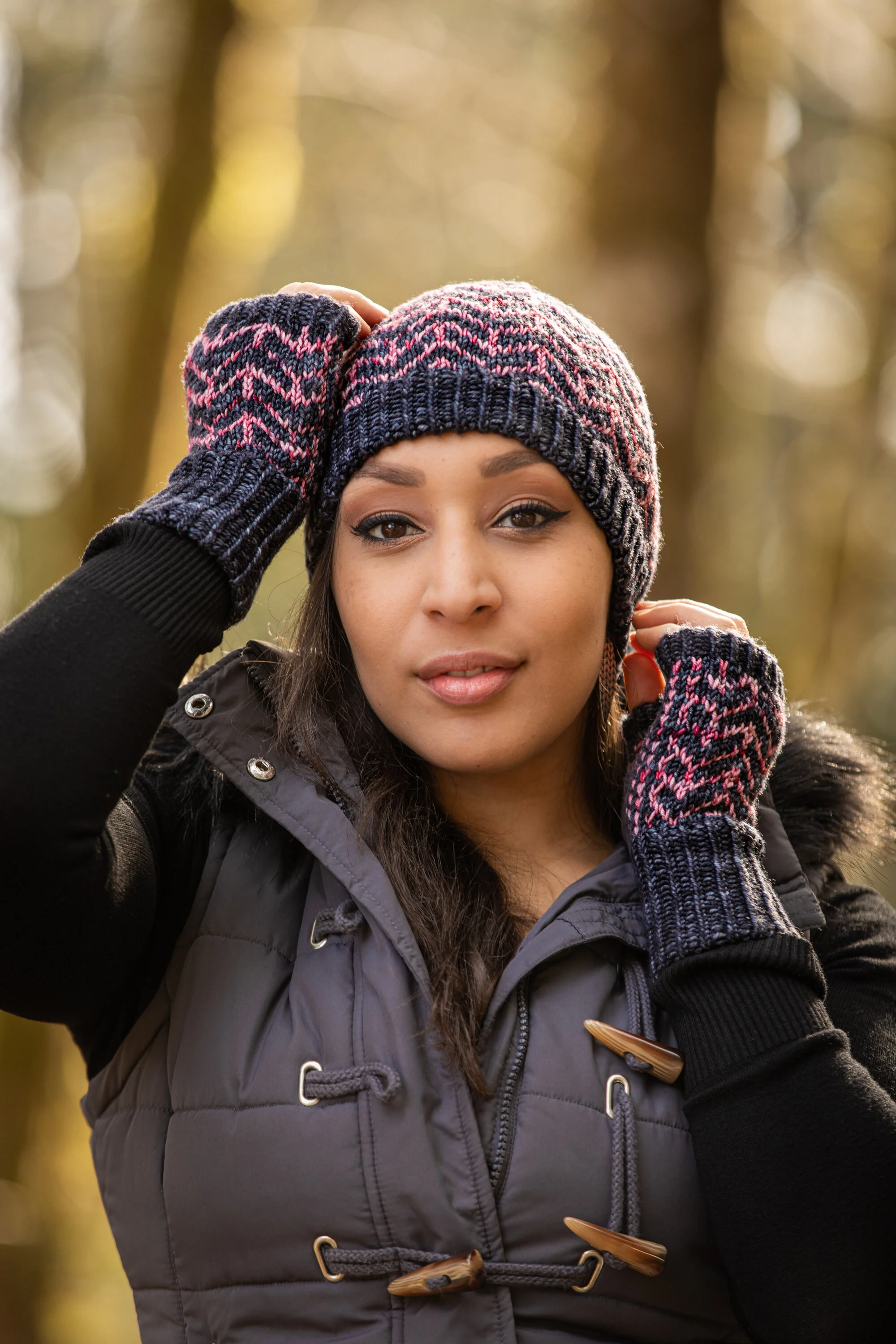
The mitts were always part of the plan. From the moment I finished the Kestra Hat, I knew I’d make matching mitts. I still had plenty of yarn leftover, the main chevron stitch pattern was meditative and fun, and my hands were always cold. But I wasn’t able to cast on for a couple months. In that time, my husband Cody and I had moved into our new house and added Brogan, a new puppy, to the family. Things were busy, but in the best way.
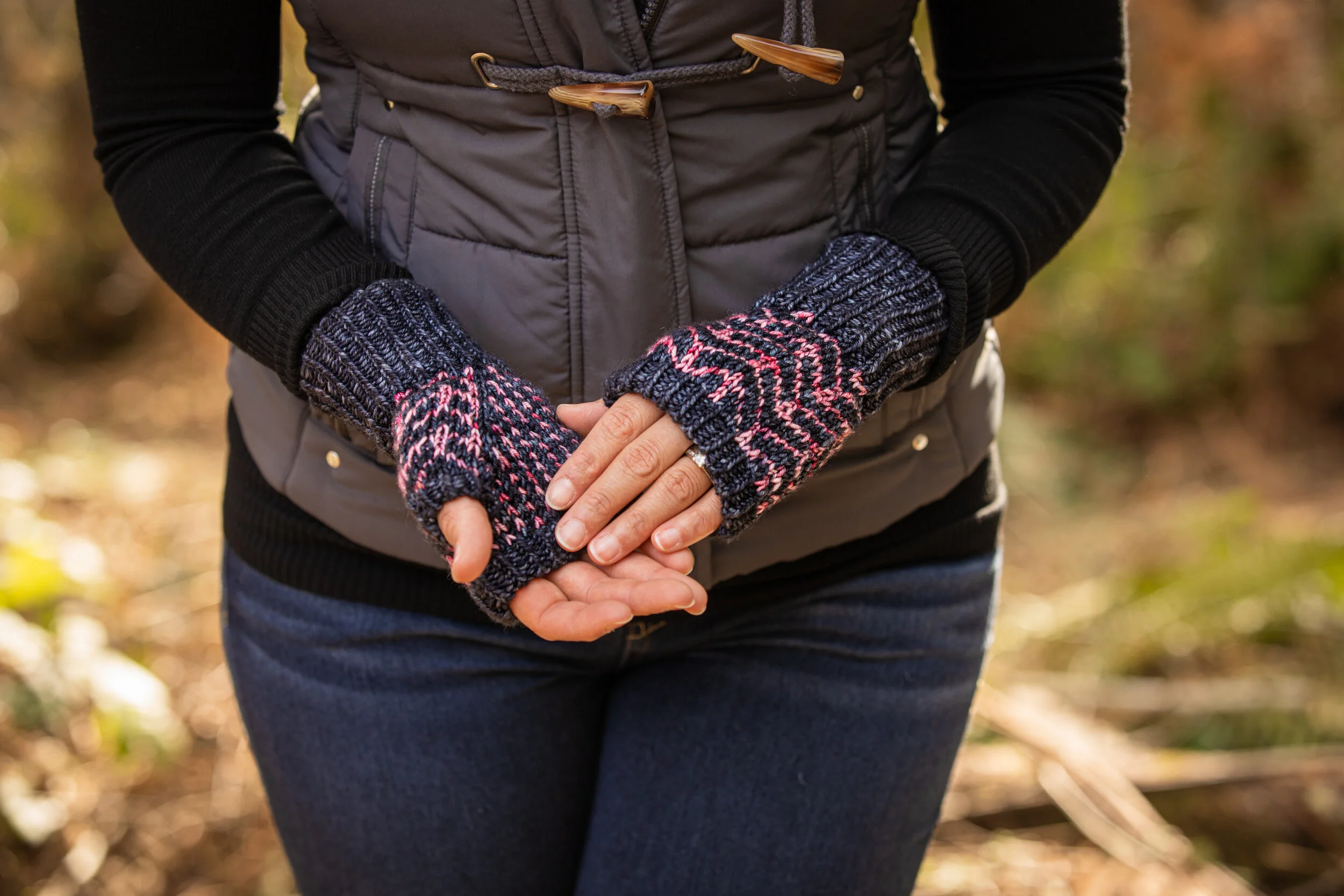
At the earliest hint of a break, I went back to my charts and picked up my needles. For the shaping, I used what I’d learned from the Novemberist Mitts but, like that pattern, I wanted to explore something different, not just a repeat of the hat. So I added a second, unique stitch pattern for the palms. This detail, a visual break from the top of the hand and thumb gusset, became one of my favorites.
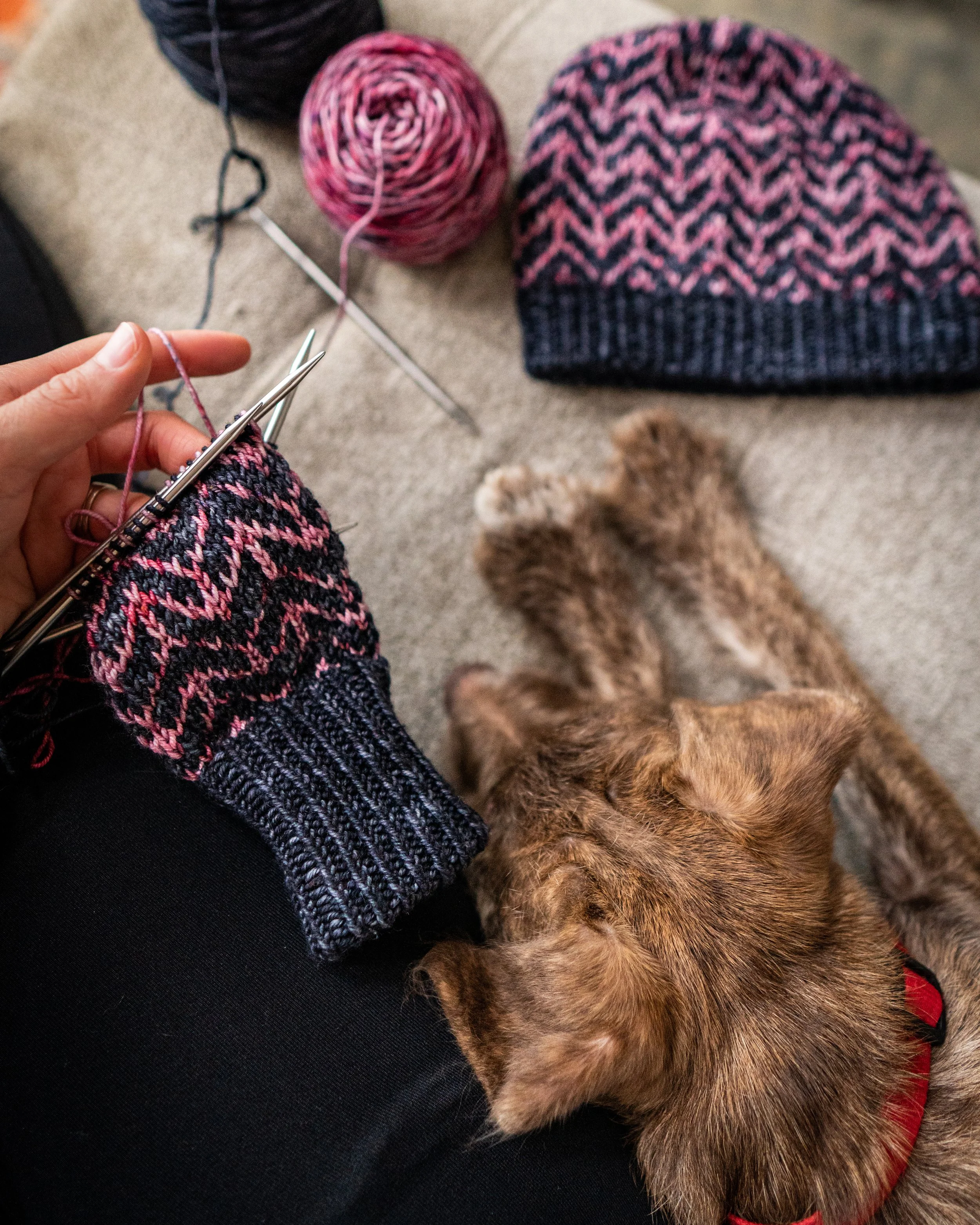
Over the next few weeks, I snuck in stitches during evenings and weekends, between work and life. Without fail, Brogan or our other dog, Wes, would settle right beside me on the couch, and there was something special about working on these mitts in our new house—making something not only with but also for my hands while everything else was finally slowing down.
If you’re looking for a reason to pause—something rhythmic that settles into your evenings—here they are.
What makes them special
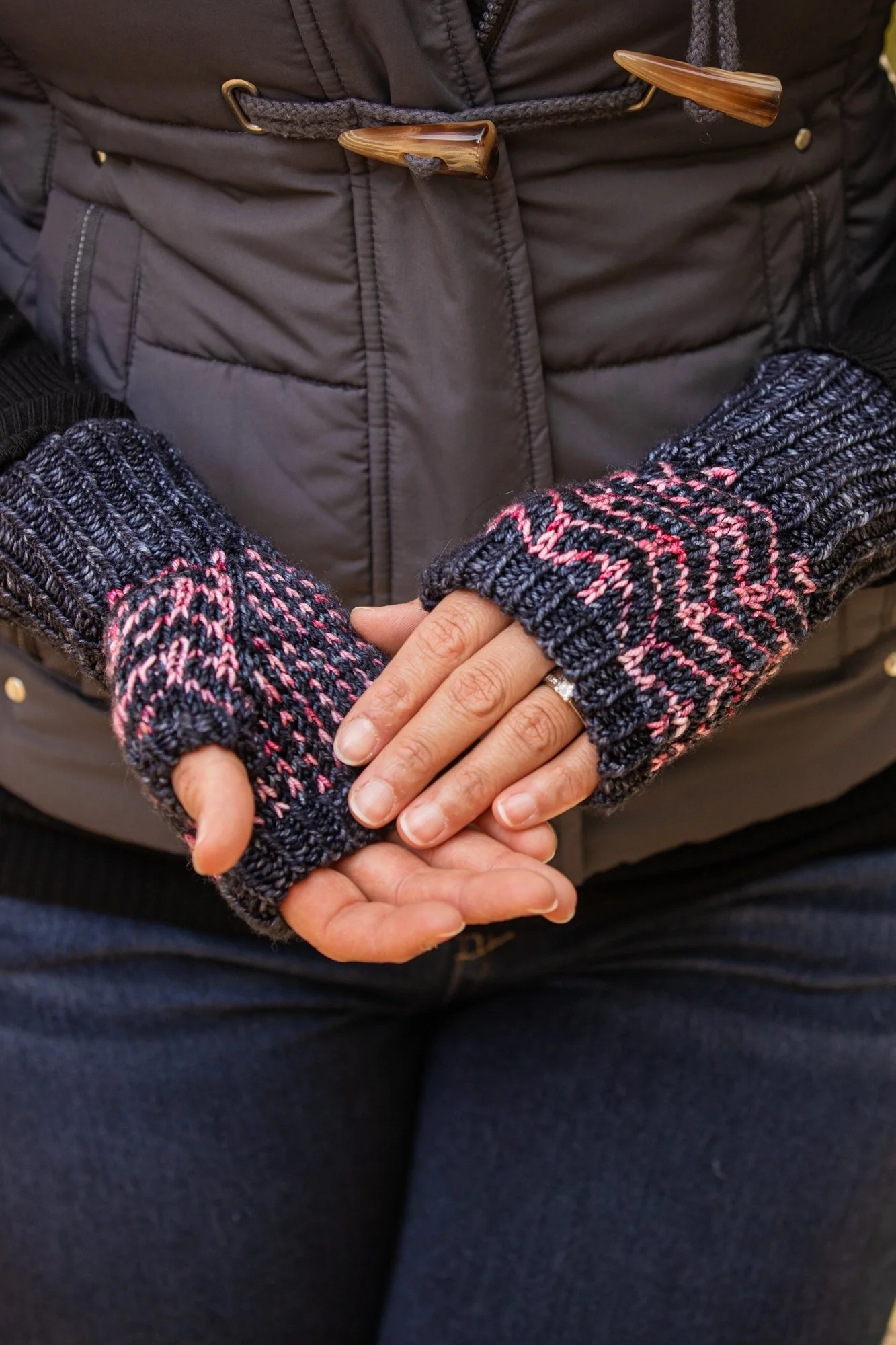
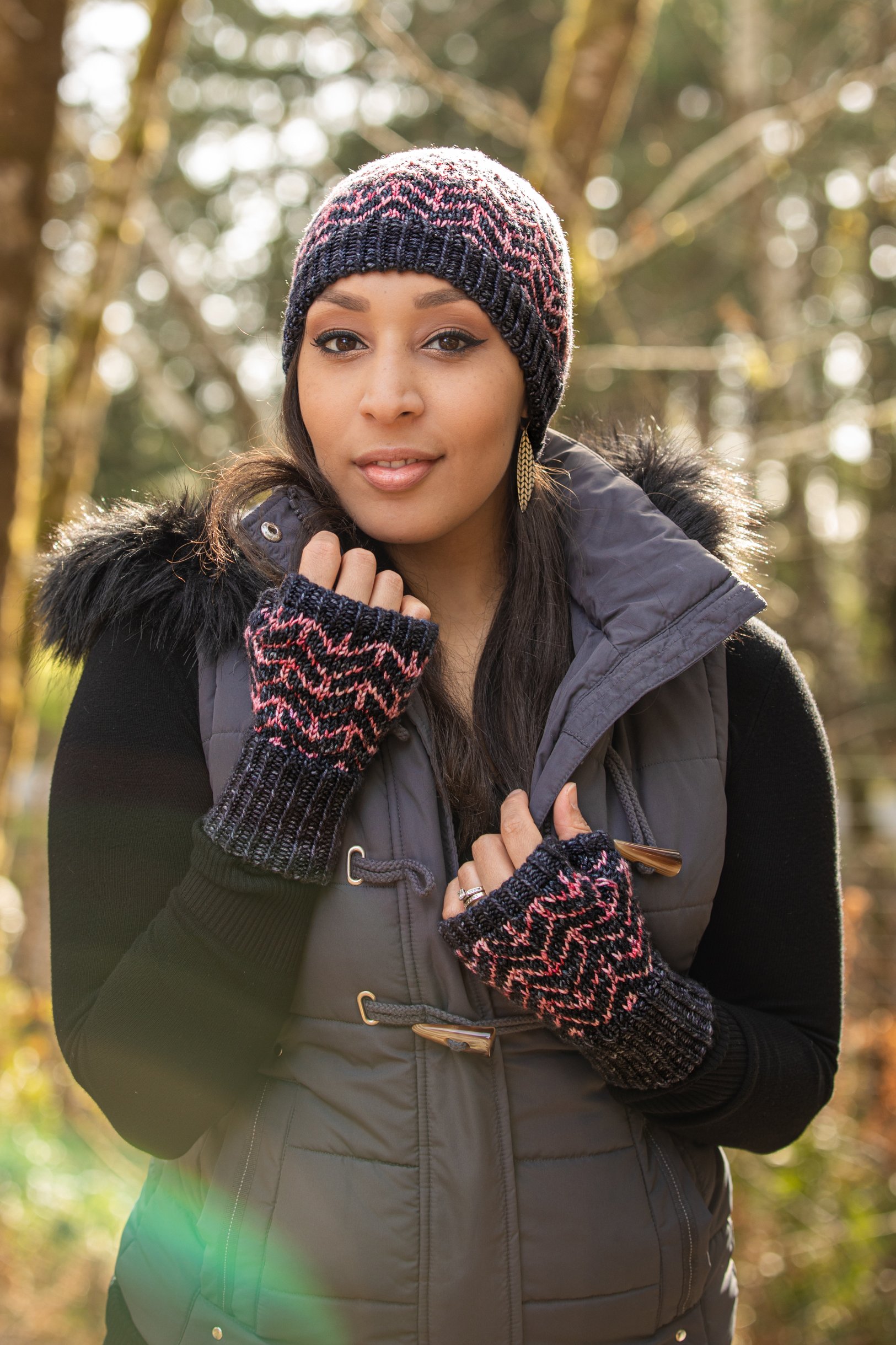
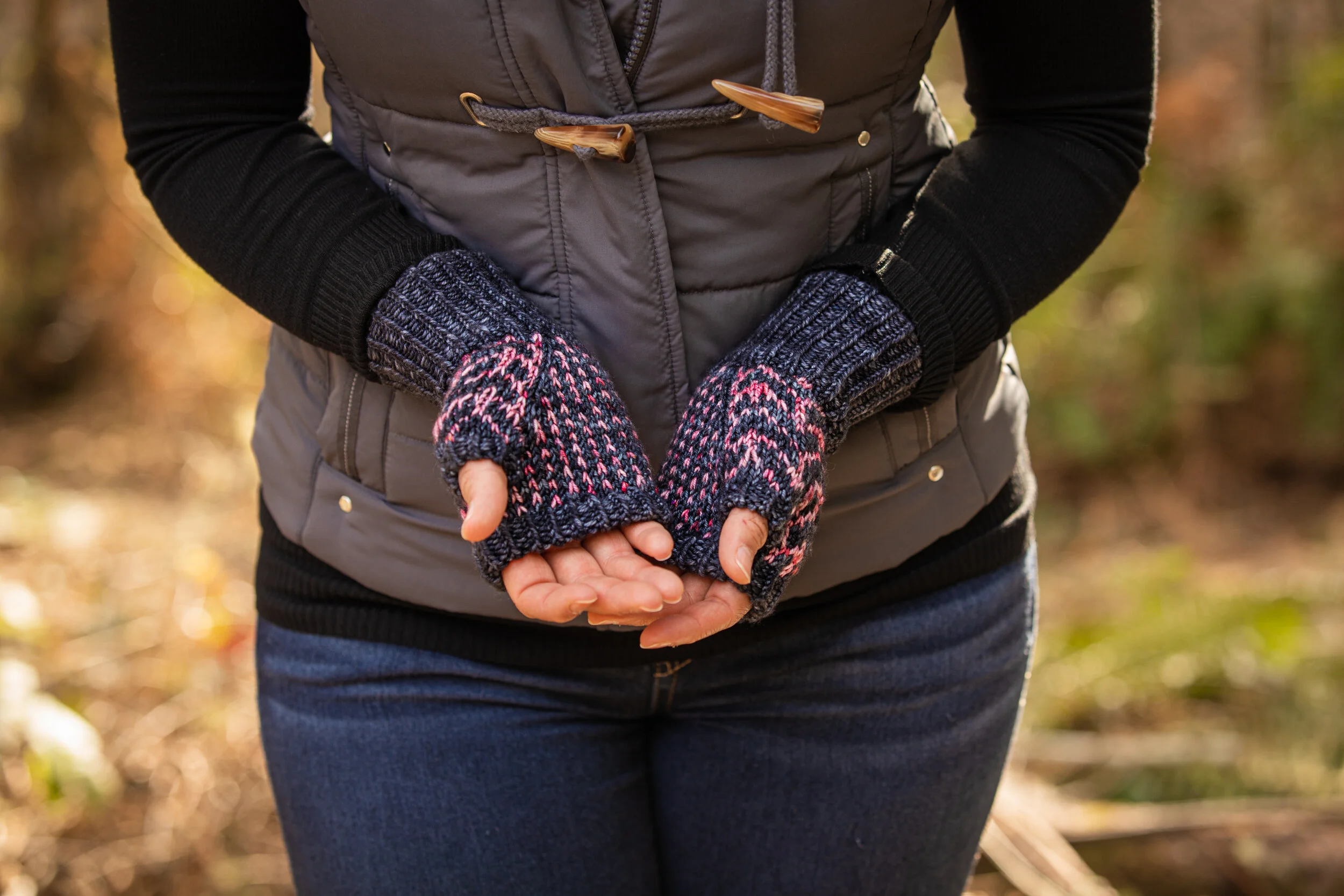
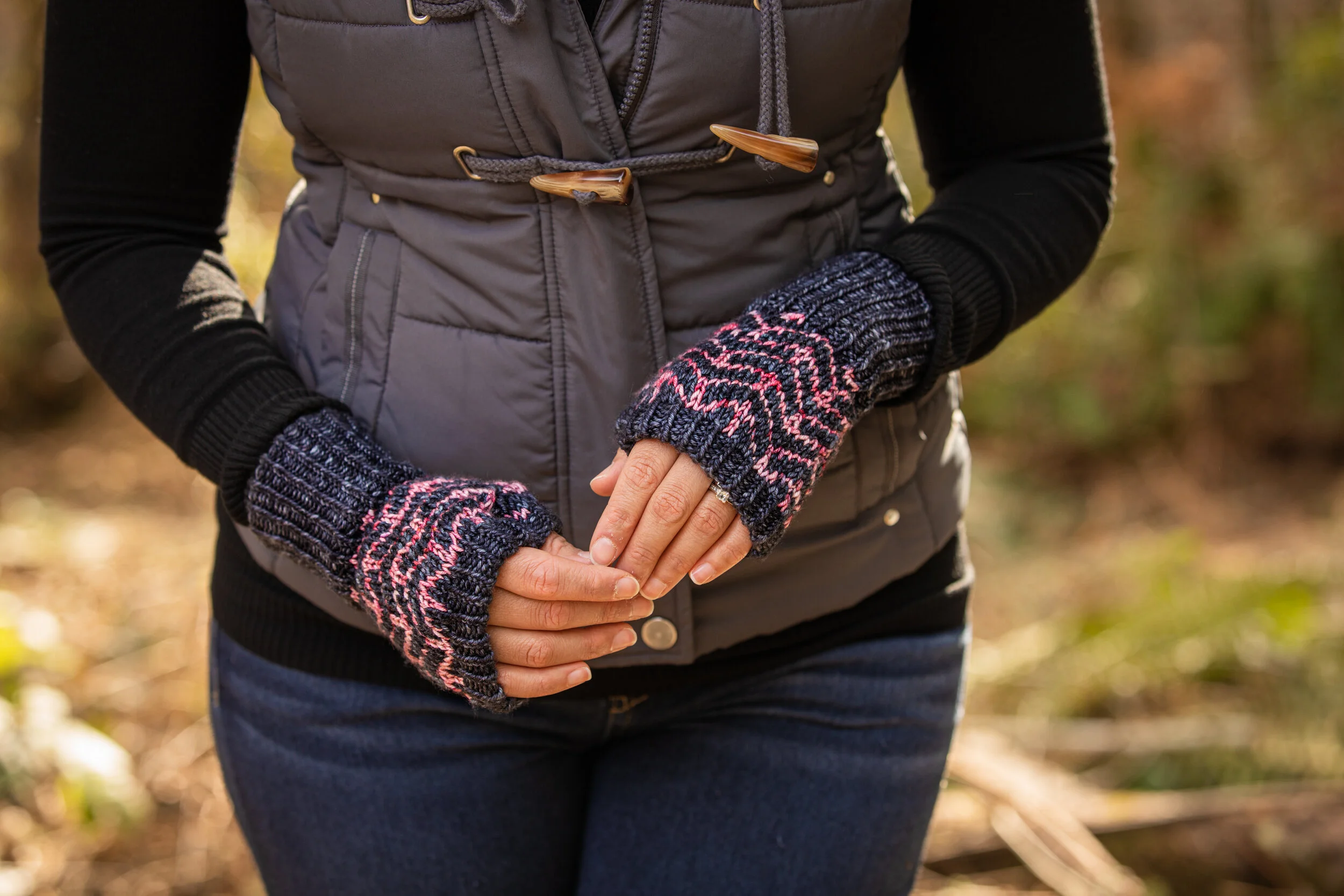
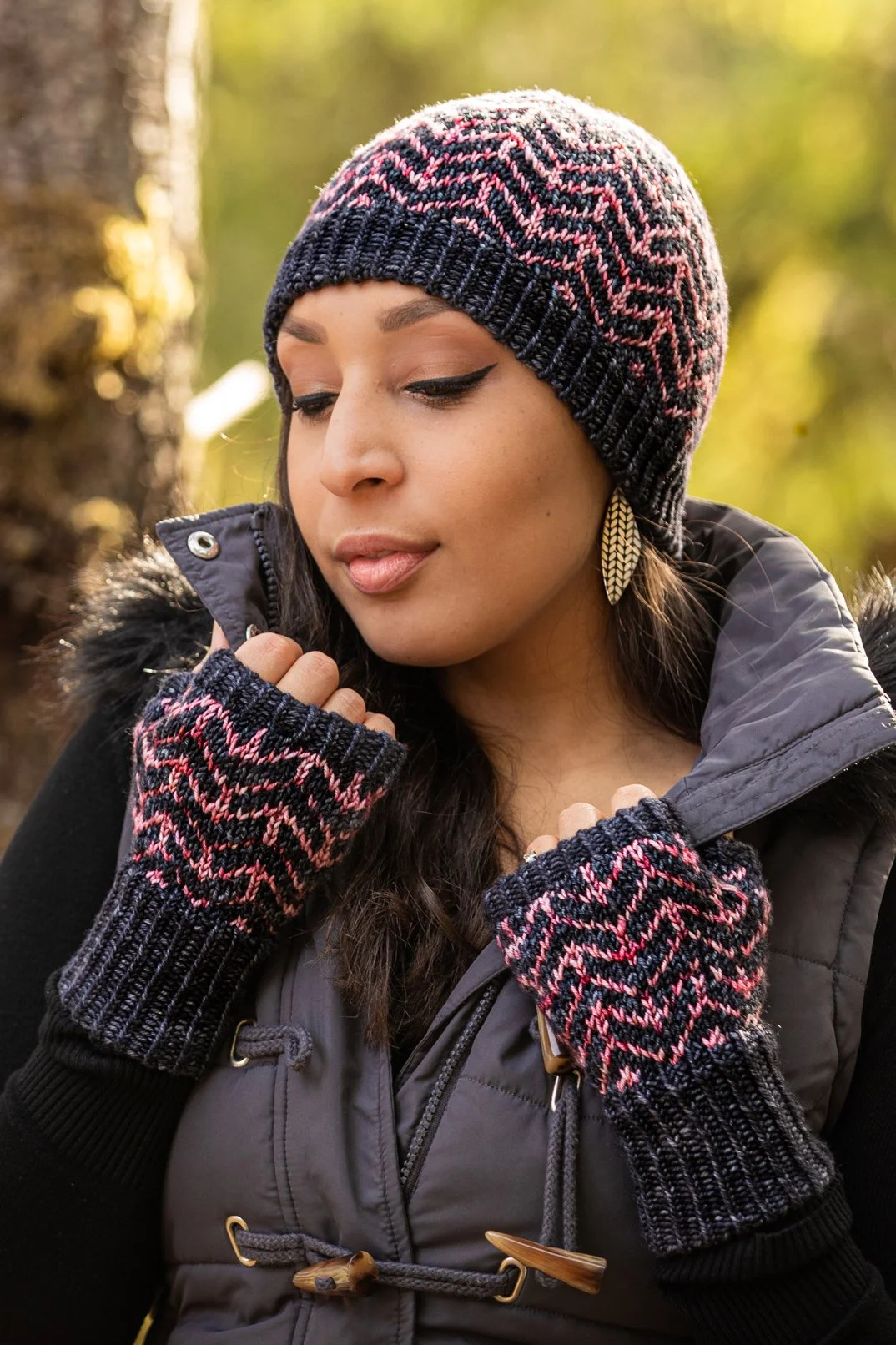
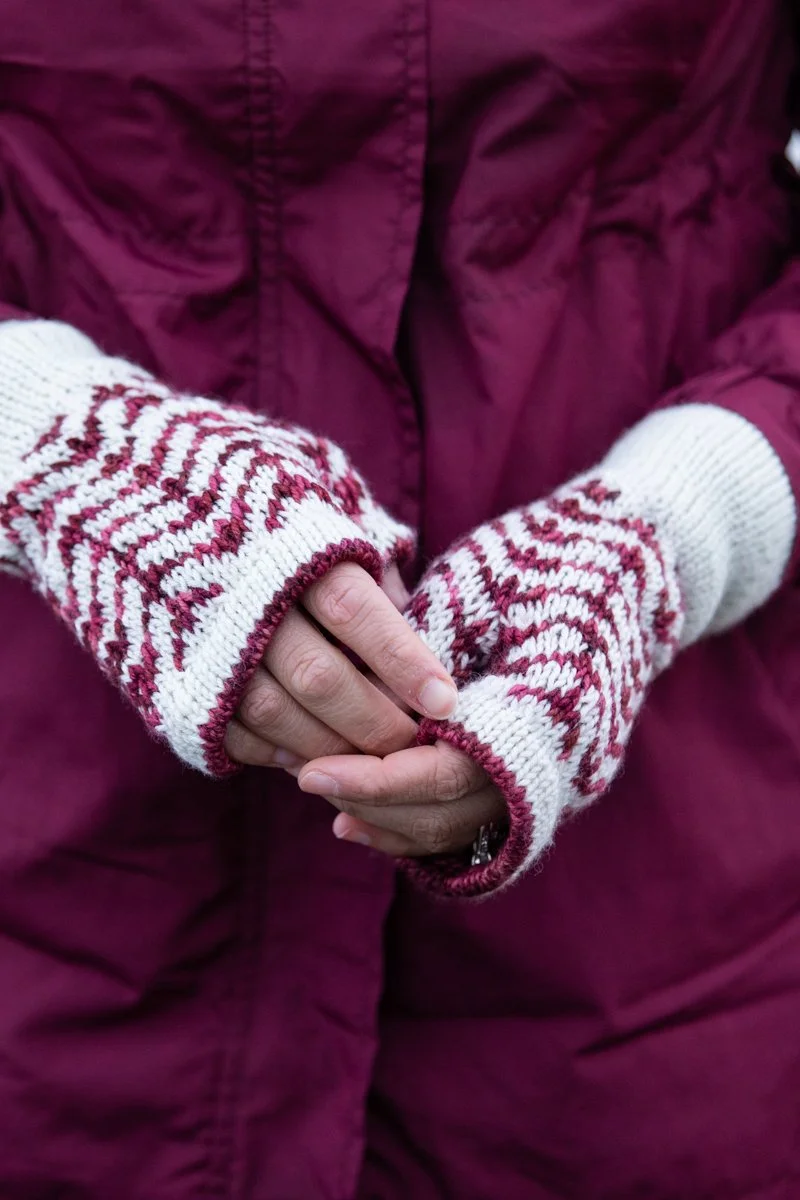
Folded, twisted rib edgings. Squishy, snug, and double-thick for genuine warmth—the kind of thing you’ll want to slip on when your house or office is a bit chilly.
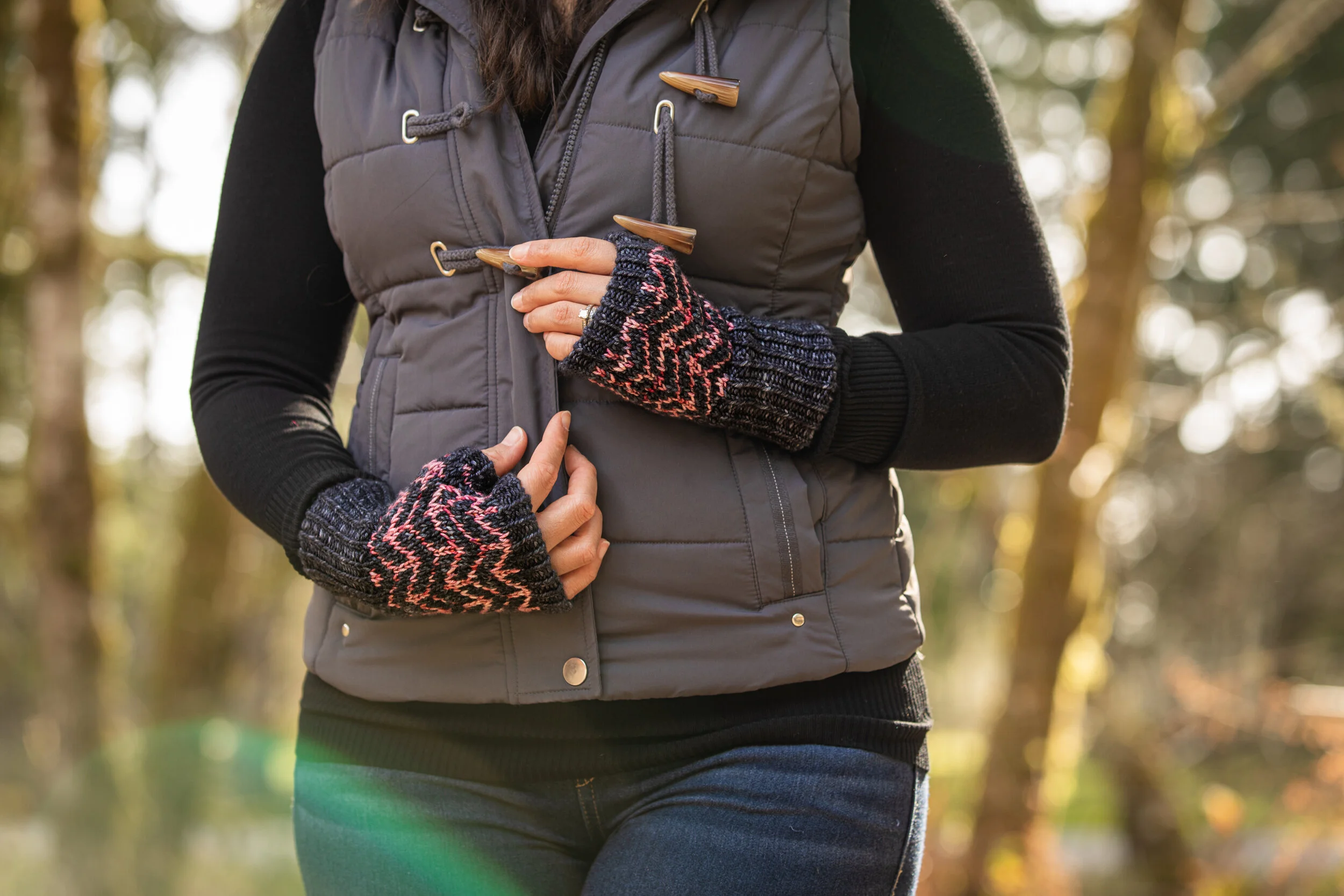
Easy, addictive colorwork. The stranded chevron and dotted stitch patterns keep you engaged without demanding too much focus.
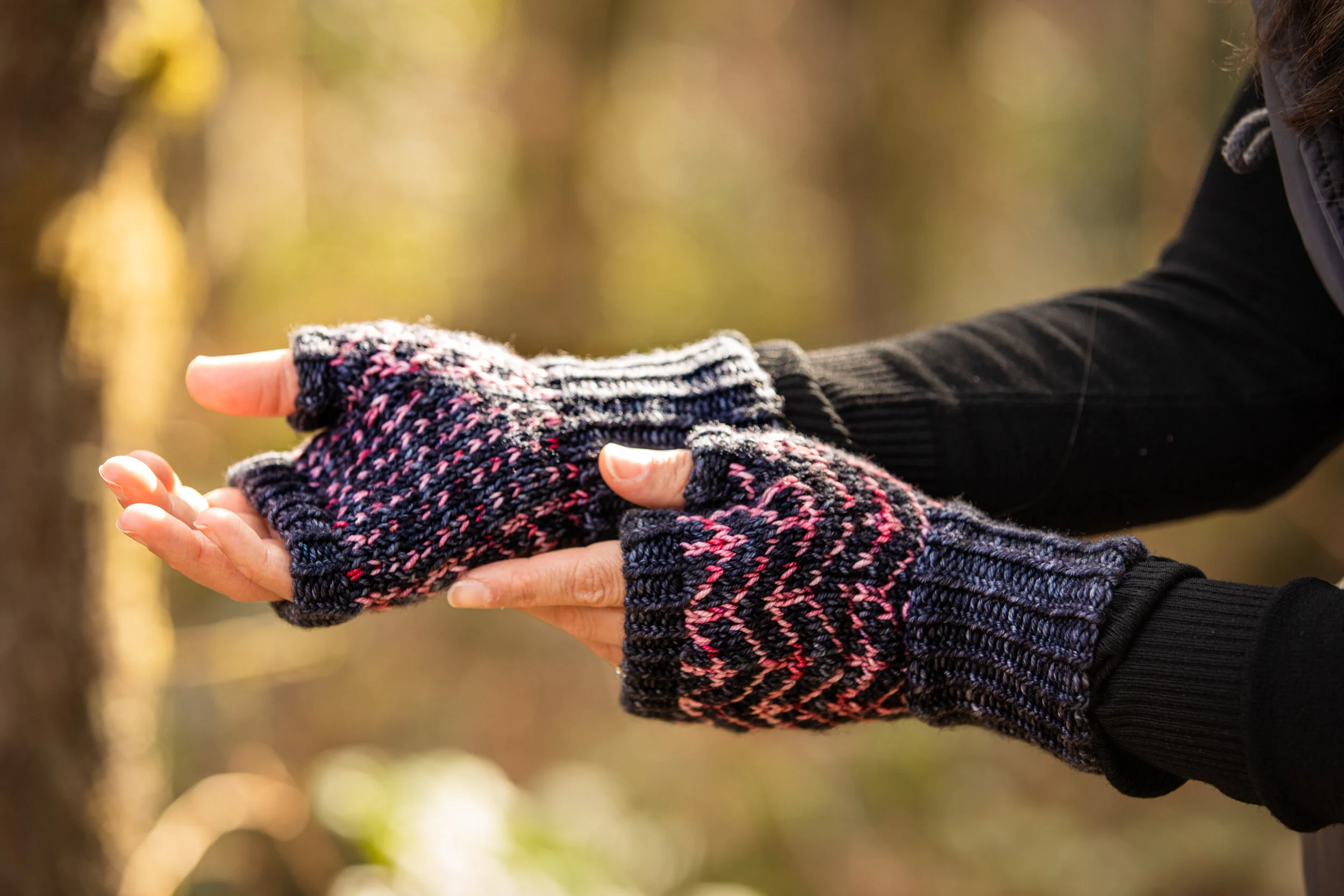
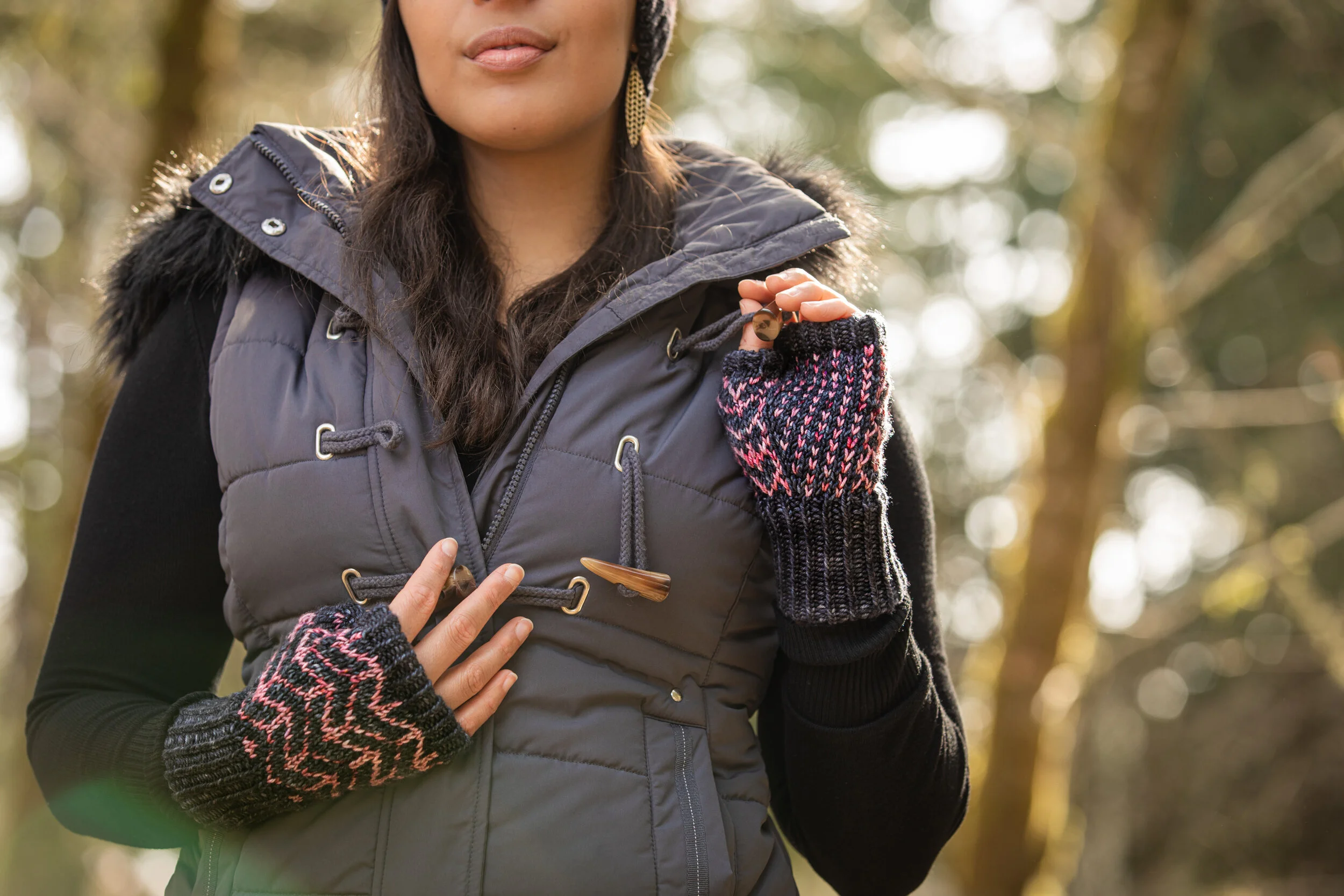
A hidden stitch pattern on the palms. It’s mostly tucked away, but you’ll catch glimpses of it as you use your hands.
Quick to knit. Small circumference and straightforward construction mean you’ll have them finished in a few focused sessions. This is the kind of project that doesn’t linger in your WIP pile. Slightly different shaping for each hand ensures enough variety that you won't have “second sock syndrome.”
Efficient yarn use. You’ll use surprisingly little of each color—and have enough left over to knit the matching hat or another small piece!
What other knitters have said
“These stylish mitts are so much fun to knit! Aren’t they so polished looking? I can see myself knitting this pattern again. Such a great one to gift. Simple engaging colourwork and I loved the sewn bind off to hem the cuff ribbing. It looked a little intimidating, but I just followed each step and the pattern is super clear. For mitt #2 I didn’t even use the waste yarn to mark the row to attach the hem. Vanessa’s pattern has so many photos and very clear charts. Tips and helpful tricks are included. Highly recommend the pattern and yarn I used.”
“Love these mitts! The pattern is beautiful, and extremely well thought out. Love the mitts. I feel like I am a very well rounded knitter, but was introduced to several new techniques in this pattern. It is quick, but not boring. The first Mitt took three days. Currently working on the second one. Absolutely love the pattern, looking forward to wearing them and knitting the matching hat!”
“Such a fast little project! I knit everything to pattern, including the folded cuff. It is so squishy! Hardly any of the contrasting color was used, so there are lots of opportunities to knit the matching hat or another piece altogether.”
“These are my favorite mitts. I will go to this pattern again and again for many reasons! I was most intrigued by how the pattern developed on the back of the hand and the palm. Because of the chart details, it was easy to read and understand where you were knitting on the pattern. Not only is this an opportunity to practice colorwork, but it is an excellent canvas for small circumference knitting. At times I used my Addi FlexiFlips, and other times just DPNs. The folded over edges really do add that much more warmth. Perfect for me since my hands are always cold!”
“Such a fun project - I learned a new technique to fold over and seam the top ribbing, and I had my first-ever successful provisional cast-on, too :) Vanessa’s tutorials in this pattern are fantastic.”

What you get
Step-by-step instructions in a downloadable PDF. Complete guidance from cast on to finishing, plus charts for each hand (no mental flipping required).
Videos for both cast-on options. Learn the chained provisional cast on if you’re doubling your cuff or the German twisted cast on if you’re knitting it flat.
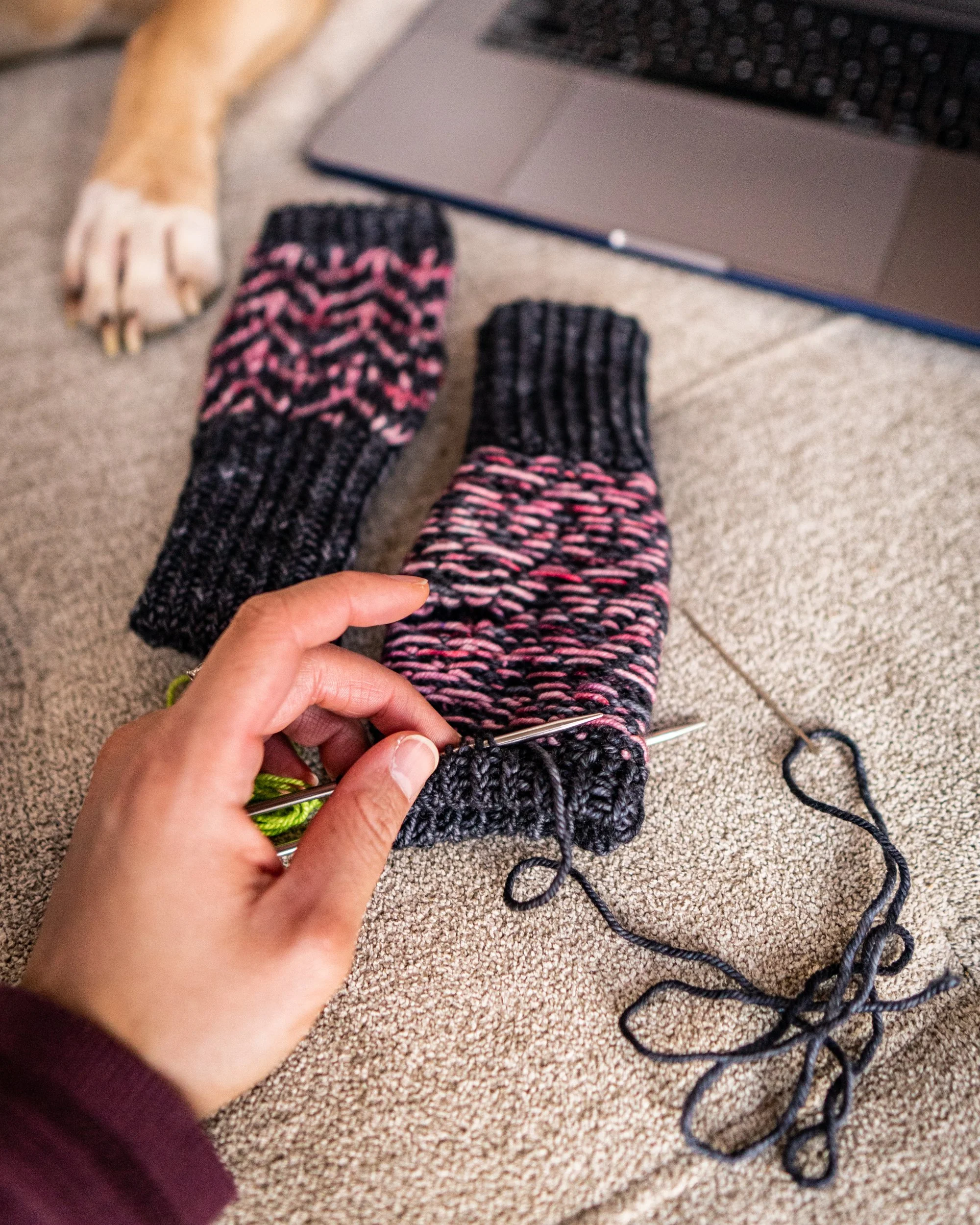
A photo tutorial for turning down the hem. See exactly how to fold and finish the edges around your fingers.
One size, adjustable. Change your needle size or yarn weight to customize the gauge and fit.
Need a stranded colorwork refresher? Check out my video on stranded colorwork knitting for guidance on holding your yarns, managing floats, and keeping small-circumference colorwork even & stretchy.
Your hands have been waiting for these.
The mitts were always part of the plan. From the moment I finished the Kestra Hat, I knew I’d make matching mitts. I still had plenty of yarn leftover, the main chevron stitch pattern was meditative and fun, and my hands were always cold. But I wasn’t able to cast on for a couple months. In that time, my husband Cody and I had moved into our new house and added Brogan, a new puppy, to the family. Things were busy, but in the best way.
At the earliest hint of a break, I went back to my charts and picked up my needles. For the shaping, I used what I’d learned from the Novemberist Mitts but, like that pattern, I wanted to explore something different, not just a repeat of the hat. So I added a second, unique stitch pattern for the palms. This detail, a visual break from the top of the hand and thumb gusset, became one of my favorites.
Over the next few weeks, I snuck in stitches during evenings and weekends, between work and life. Without fail, Brogan or our other dog, Wes, would settle right beside me on the couch, and there was something special about working on these mitts in our new house—making something not only with but also for my hands while everything else was finally slowing down.
If you’re looking for a reason to pause—something rhythmic that settles into your evenings—here they are.
The Knitty-Gritty
Description
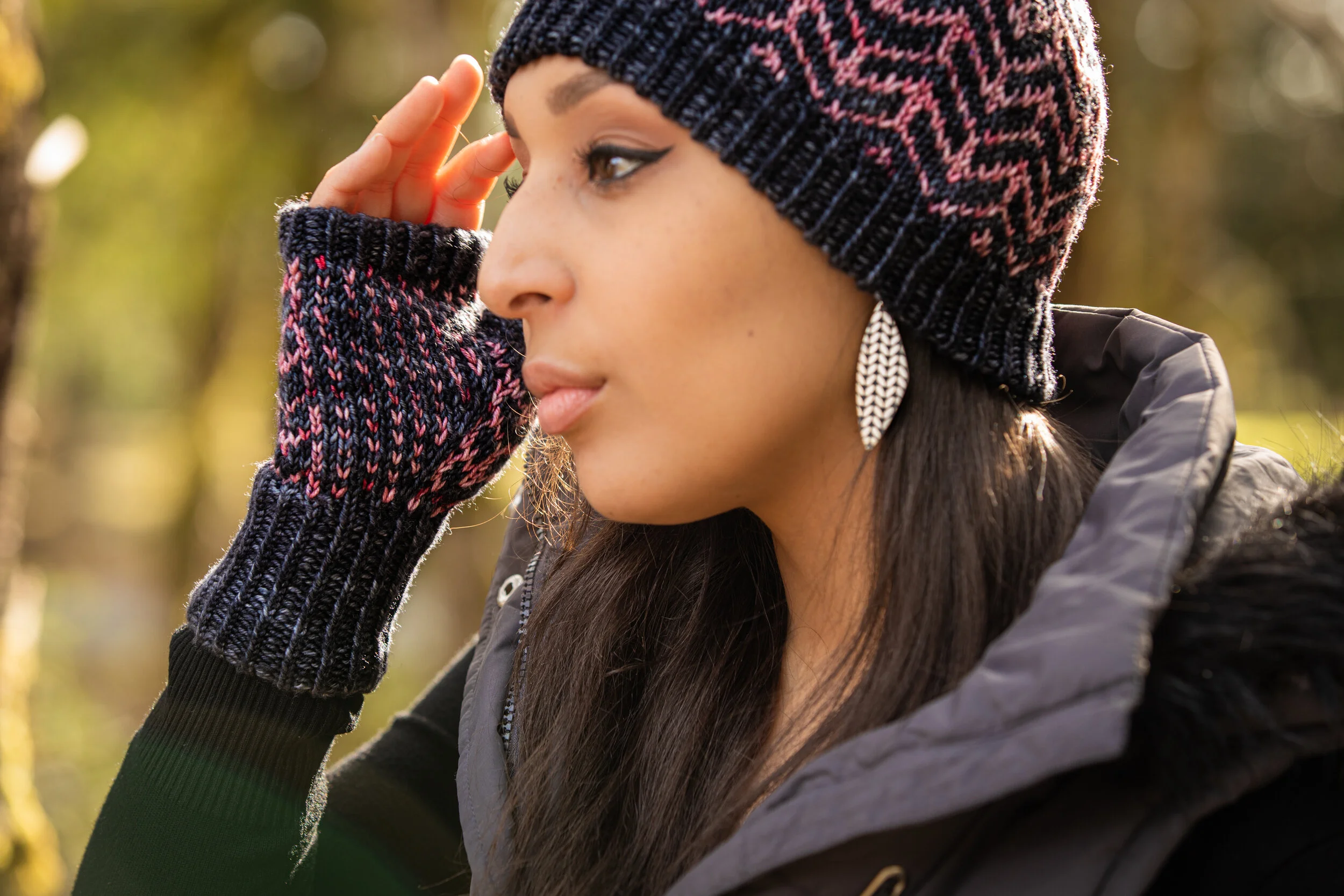
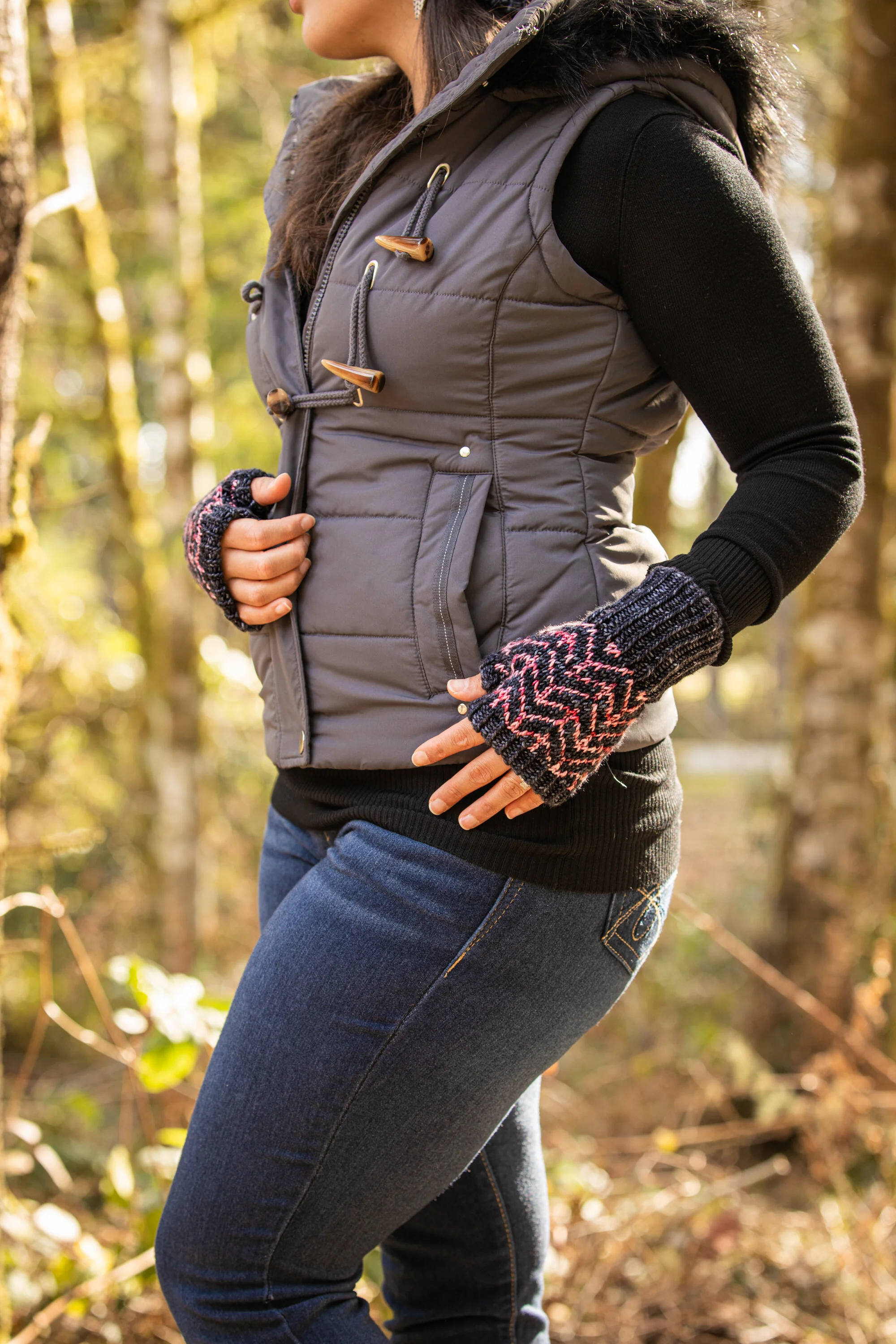
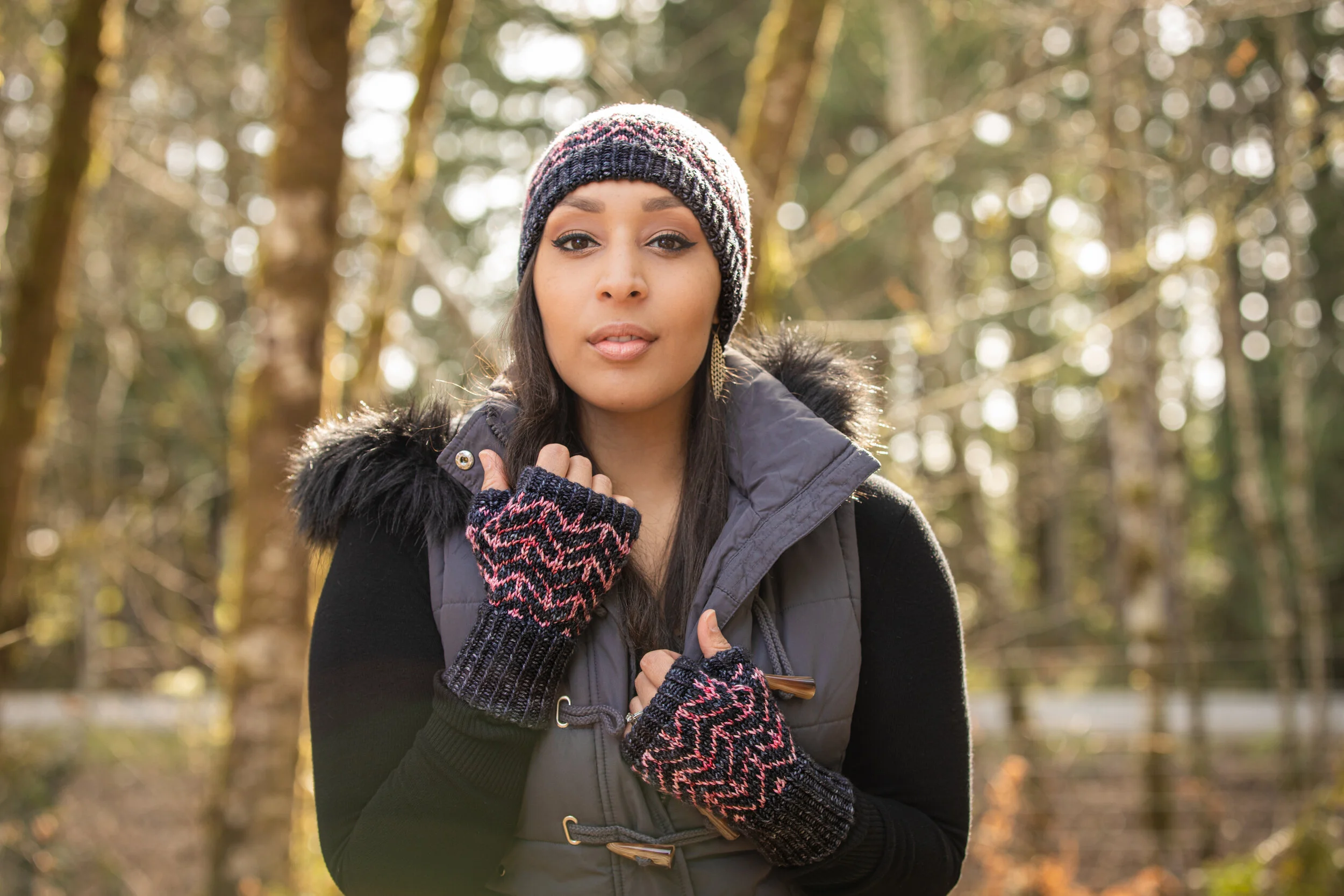
Folded, twisted rib edgings and simple stranded colorwork together make the Kestra mitts doubly thick and extra warm—and a fun, addictive knit! A geometric chevron pattern dances across the tops of the hands and around the thumbs, only to reveal speckled palms when the mitts are turned over. Pair them with the matching hat for added warmth and effortless style!
Sizes
One Size
Finished Measurements
3½” (9 cm) wide [7” (17.5 cm) circumference] at knuckles; 3” (7.5 cm) wide [6” (15 cm) circumference] at wrist; and 7¾” (19.5 cm) tall, when laid flat
Yarn
Approximately 203 yards (186 meters) DK weight yarn:
165 yards (151 meters) main color [103–119 yards (94–109 meters) if knitting flat cuffs and edgings]
38 yards (35 meters) contrasting color
Needles & Hooks
US 7 (4.5 mm) needle(s) for your preferred method of knitting small circumferences in the round, or needle size necessary to obtain correct gauge
US 4 (3.5 mm) needle(s), or needle size 1 mm smaller than gauge needle
If using magic loop for cuff and hand sections, double-pointed needles of the same two sizes for working the thumbs
Spare circular needle in size identical or similar to smaller needle(s), 20” (50 cm) or longer
Size E (3.5 mm) crochet hook (for chained provisional cast on), or hook size comparable to gauge needle size
Gauge
Stranded Colorwork: 28 sts and 24 rnds = 4” (10 cm), worked in the round using larger needles, after blocking
Twisted Rib: 22.5 sts and 32 rnds = 4” (10 cm), worked in the round using smaller needles, after blocking
Notions
(1) Stitch marker for beginning of round (optional)
(3) Stitch markers for keeping place in charts (optional)
(1) Locking stitch marker
Waste yarn (same weight as working yarn and fingering weight; in high-contrasting colors; and smooth)
Tapestry needle
Your hands will thank you.
The mitts were always part of the plan. From the moment I finished the Kestra Hat, I knew I’d make matching mitts. I still had plenty of yarn leftover, the main chevron stitch pattern was meditative and fun, and my hands were always cold. But I wasn’t able to cast on for a couple months. In that time, my husband Cody and I had moved into our new house and added Brogan, a new puppy, to the family. Things were busy, but in the best way.
At the earliest hint of a break, I went back to my charts and picked up my needles. For the shaping, I used what I’d learned from the Novemberist Mitts but, like that pattern, I wanted to explore something different, not just a repeat of the hat. So I added a second, unique stitch pattern for the palms. This detail, a visual break from the top of the hand and thumb gusset, became one of my favorites.
Over the next few weeks, I snuck in stitches during evenings and weekends, between work and life. Without fail, Brogan or our other dog, Wes, would settle right beside me on the couch, and there was something special about working on these mitts in our new house—making something not only with but also for my hands while everything else was finally slowing down.
If you’re looking for a reason to pause—something rhythmic that settles into your evenings—here they are.
Buy it on Ravelry.
You may also like . . .
The hat was barely off the needles when I cast on the mitts. That November had been a whirlwind—my first trunk show, the trip to Victoria with my husband Cody and his cousin, all of it. And now I’d finally learned how to knit stranded colorwork and made the hat I’d been dreaming about. It had been awkward at first, to use both hands to hold separate yarns, but so satisfying. When Cody helped me choose the colors for the final sample—the warm red with rust and strawberry undertones, that pop of it peeking out from the turned brim—I knew immediately: this hat needed matching mitts.
But I didn’t want to just repeat the hat. I wanted to keep playing with the colorwork on a different canvas—a smaller, more intimate space. I also had an idea for a second stitch pattern on the palms, something complementary and unexpected. And I wanted to explore a unique approach to construction, a way to keep the colorwork flowing continuously around the hand instead of interrupting it with a standard thumb gusset.
They came together so quickly. Each one knit up in just a couple days of focused time, and when I slipped on the completed pair, they were satisfyingly warm and cozy. They tied the whole look together—the colors, the techniques, all of November compressed into something wearable on your hands.
If you’ve made the hat, you already know how this goes—except faster, and with one more stitch pattern to discover.

After finishing three textured sweaters and a shawl back-to-back, I was looking for something small—what some knitters might call a “palate cleanser.” A friend who’s an avid sock knitter and always keeps a pair of socks on the needles suggested I make some. I loved the idea, especially as it had been several years since I knit socks. There’s also nothing quite like the feeling of handmade socks.
It’s hard for me to do anything vanilla, though, and I wanted the finished socks to have a lovely, squishy texture on someone’s feet. So I chose stranded colorwork using the same geometric chevron motif from the Kestra Hat and Mitts. And I knew exactly which colors: Midknit Cravings—a friend and dyer whose work I adore—had test knitted the Kestra Hat for me the year before in Shiraz and Petal. I loved them together so much, I just had to use them too.
The construction also mattered. I’d never designed socks before. But just like a good top-down sweater, toe-up socks made sense for the ability to try on as you go. And I chose a forethought heel to ensure an uninterrupted colorwork pattern while giving you good heel placement. No cutting required; just straightforward, satisfying knitting.
A fun group of experienced sock knitters tested and confirmed that the technical choices worked. The Turkish cast on became a new favorite technique. The forethought heel won them over. The PDF layers feature solved a real problem: knitters could flip the chart to match their chosen colorways instead of doing mental color swaps. I also learned that sock fit is surprisingly similar to sweater fit—instep circumference, foot width, and length from toes to heel all matter the same way.
All the design work, testing, and lessons learned are built into this pattern. You just bring the skill you already have and go straight to the knitting. So if you’re ready for something that’s quick to knit, genuinely squishy to wear, and satisfying to finish, this is it.
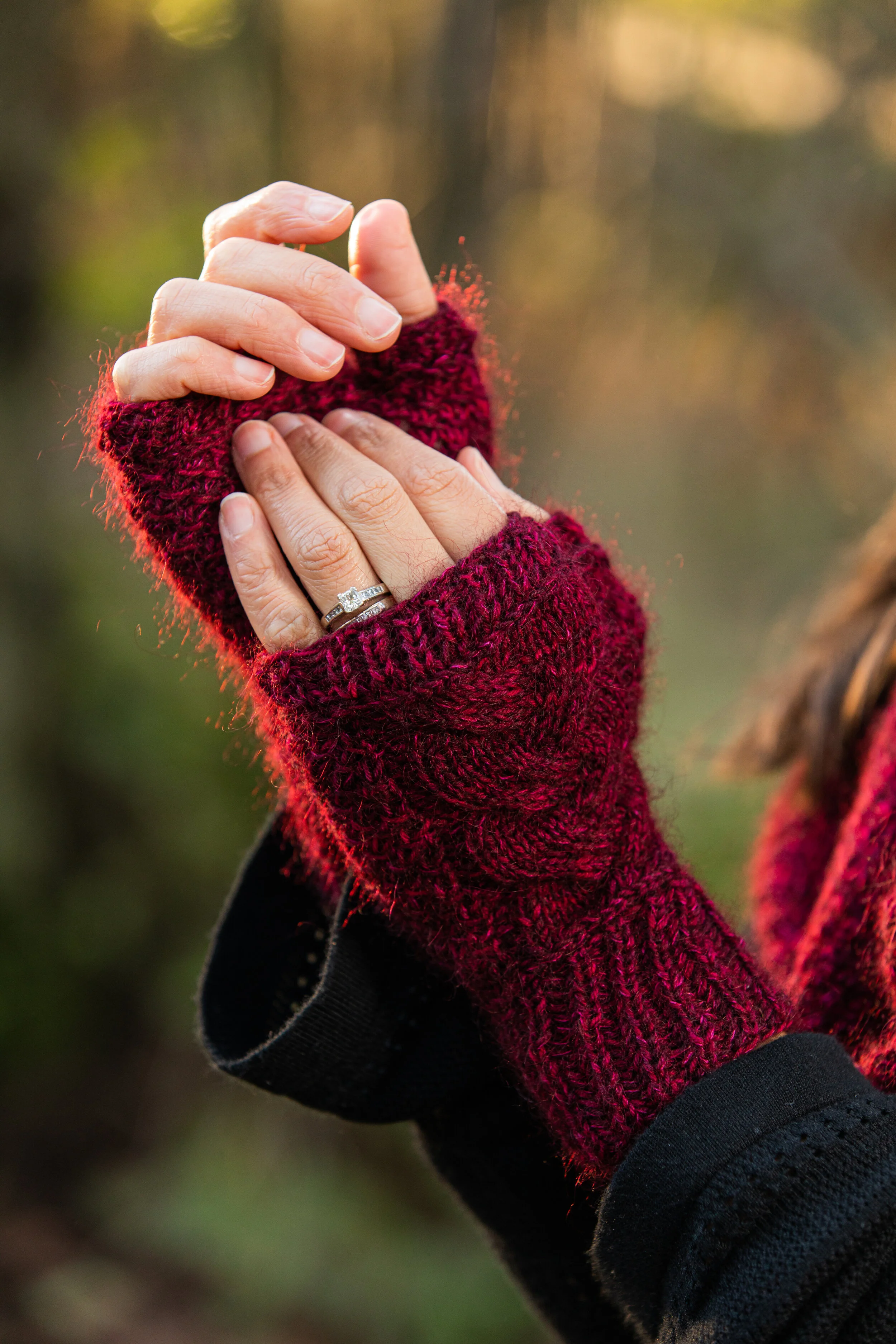
I love a good set. When I finished the Indira Cowl and held it in my hands, I already knew what I would be casting on next—I’d planned the mitts from the moment I chose that lovely deep red yarn, getting extra specifically for them.
Both the shawl and cowl had taught me a lot about what was quickly becoming my favorite lace stitch, the double-braided cable, and the fisherman’s rib that anchors them. I found myself wanting to use all three together again. Somewhere the wearer would see them constantly: their hands.
Similar shaping to the Novemberist Mitts felt like the right foundation, but what if I kept the stitch pattern continuous across the palm and thumb instead? And what if I moved the gusset shaping from the palm side to the top of the hand, where the straight cable panel could anchor it and make it all look cohesive and intentional? What detail would I use to make the break between the stitch patterns look deliberate? Lateral braids solved that beautifully, framing the edges and tying everything together.
Once I cast on, the mitts practically flew off my needles—instant gratification knitting at its best. The fingering weight held together with mohair created something airy and light, but when I slipped them on, they were remarkably warm. Beautiful and elegant, yet functional and practical.
If you’ve made the cowl or the shawl, the stitches will feel familiar in your hands. If not, these mitts are a beautiful introduction to the squishy textured lace, cable, and fisherman’s rib—and they’ll be finished in a fraction of the time. That’s what I love about a good set: these work just as well as the beginning as they do the finale.